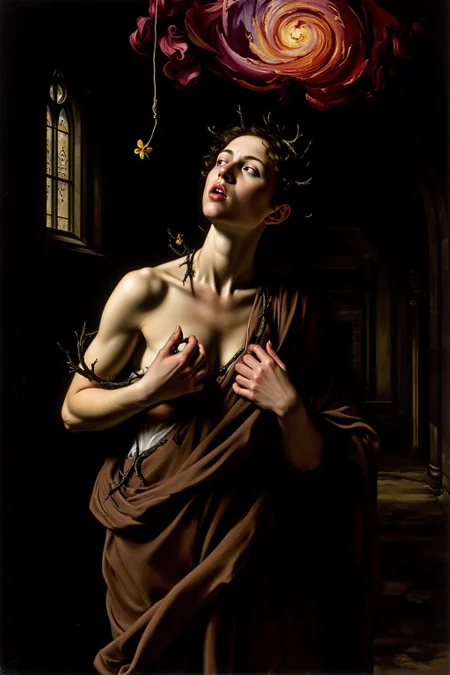
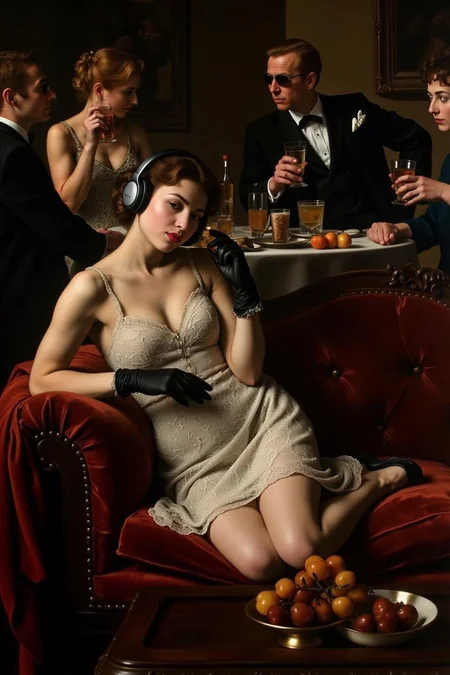


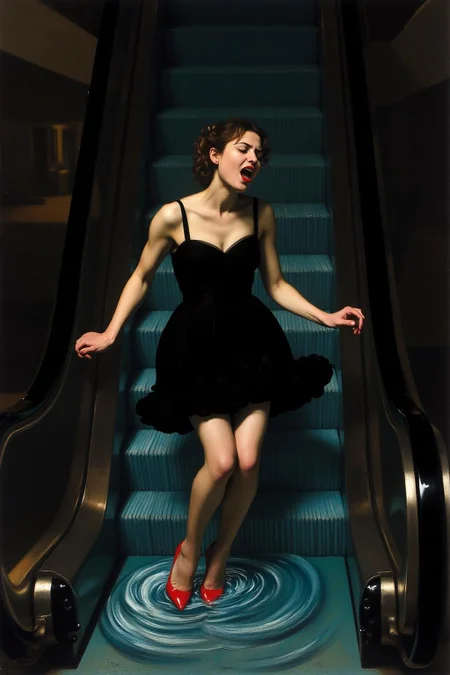
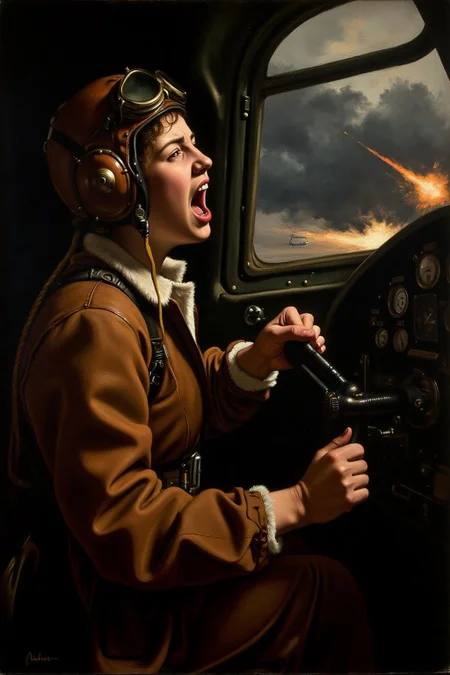
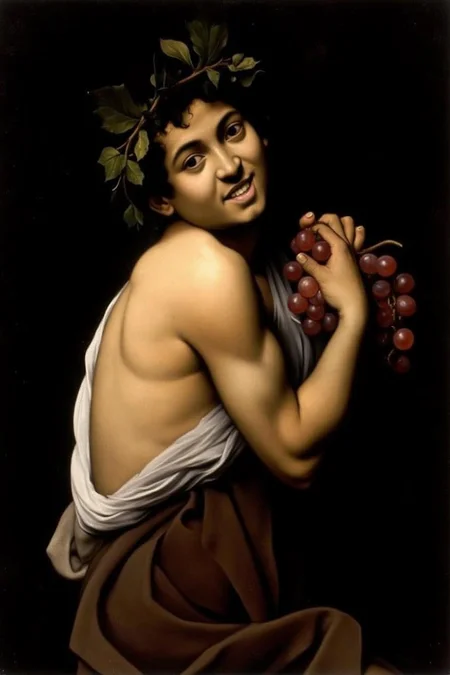
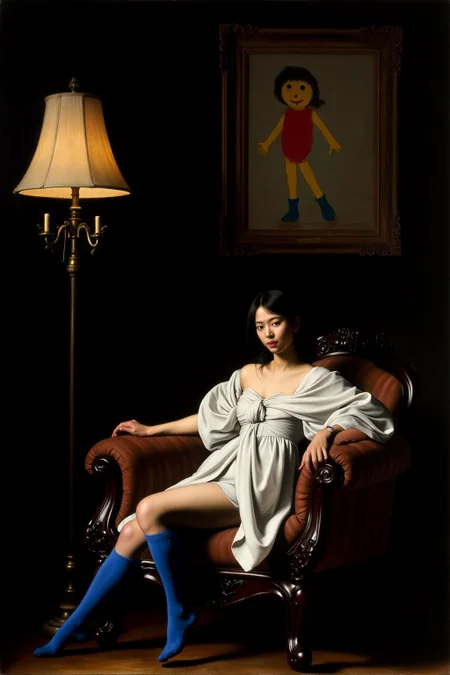




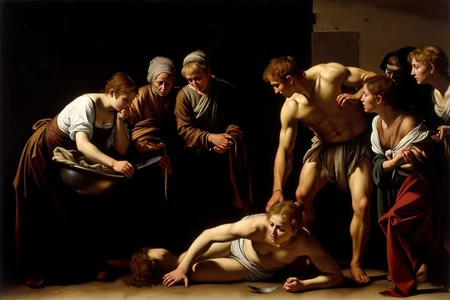
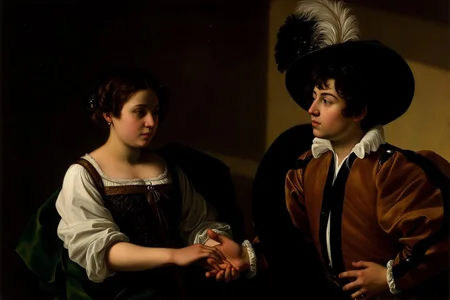
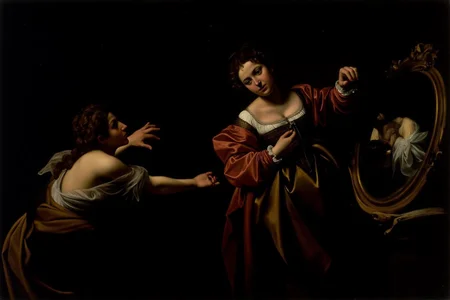

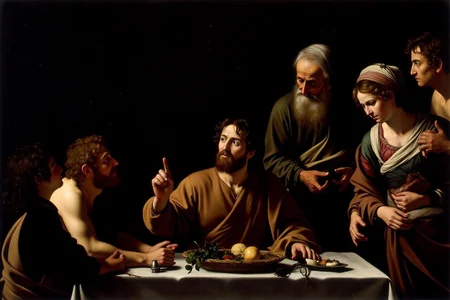
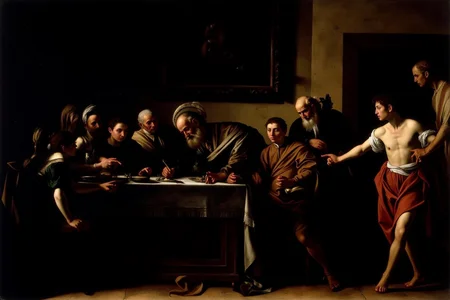
Trained on seventeen paintings by the Italian artist Caravaggio (29 September 1571[2] – 18 July 1610), one of the best known painters from the Baroque period. To see his works, please go to
I've not encountered any big problem with the LoRA during testing, other than the occasional weird limb, and its inability to render severed heads 😅
From ChatGPT:
 Chalk portrait of Caravaggio, c. 1621
Caravaggio (29 September 1571 – 18 July 1610), born Michelangelo Merisi da Caravaggio, was an Italian painter who became one of the most influential figures of the Baroque era. Known for his dramatic use of light and shadow (tenebrism) and his realistic, emotionally charged depictions of biblical and mythological scenes, Caravaggio revolutionized art with his raw, human portrayal of sacred subjects.
Key Characteristics of Caravaggio's Art
Dramatic Lighting (Tenebrism)
Caravaggio mastered the use of tenebrism, an extreme form of chiaroscuro (contrast between light and dark).
He used a single, focused light source to create stark contrasts, heightening drama and drawing attention to key elements.
Realism and Naturalism
He rejected idealized beauty, depicting his subjects as ordinary people with flaws—dirty feet, weathered faces, and realistic expressions.
His models were often street people, beggars, or prostitutes, lending a gritty authenticity to his works.
Emotion and Psychological Depth
His paintings are known for their intensity and emotional realism.
Caravaggio focused on the pivotal moments in his narratives, often capturing the most dramatic and suspenseful scene.
Theatrical Composition
His compositions are dynamic and close-up, bringing the viewer into the action.
Figures often extend beyond the frame, creating a sense of immediacy and involvement.
Famous Works
The Calling of Saint Matthew (1600)
Depicts Christ calling Saint Matthew from a dimly lit tavern.
The dramatic beam of light illuminating Matthew’s surprised face symbolizes divine intervention.
The painting is famous for its subtle storytelling and realistic depiction of the apostles as common men.

Judith Beheading Holofernes (1599)
Captures the moment Judith beheads the Assyrian general Holofernes.
The scene is violent and intense, with blood spurting from Holofernes’ neck and Judith’s face full of focused determination.


David with the Head of Goliath (1610)
David holds the severed head of Goliath, which is believed to be a self-portrait of Caravaggio.
The painting is dark and haunting, with an air of melancholy and psychological complexity.

Supper at Emmaus (1601)
Depicts Christ revealing himself to his disciples after the resurrection.
The use of light, lifelike figures, and carefully staged composition make the moment feel incredibly real.



His Life and Controversies
A Turbulent Personality: Caravaggio’s life was as dramatic as his paintings. Known for his violent temper and reckless behavior, he was involved in numerous fights and even committed murder during a brawl in 1606.
Exile and Later Years: After the murder, Caravaggio fled Rome and lived in Naples, Malta, and Sicily, producing some of his most powerful works during this period.
Mysterious Death: He died under unclear circumstances in 1610 at the age of 38, possibly from fever or as a result of wounds from a fight.
Legacy
Caravaggio’s style inspired a movement known as the Caravaggisti, or followers of Caravaggio, who spread his dramatic approach across Europe.
His influence can be seen in artists like Artemisia Gentileschi, Peter Paul Rubens, and even later painters like Velázquez and Rembrandt.
Description
This is epoch 11, other epochs can be found here: tensor.art/models/828379018484007158/Caravaggio-P1-1024CapD6A3Cos5-2025-02-09-19:16:48-Ep-11
FLUX.1 - dev-fp8
Trigger: carava1 painting
Repeat: 20 Epoch: 11 (Trained on 17 1024x1024 images for 3740 total steps)
Unet LR: 0.0005 Scheduler: cosine Optimizer: AdamW
Network Dim: 6 Alpha: 3
Epoch Loss
1 0.348
2 0.352
3 0.351
4 0.343
5 0.340
6 0.343<
7 0.332
8 0.323
9 0.322
10 0.338 <
11 0.314 <- lowest
FAQ
Comments (2)
Fantastic work with this amazing LORA. Congrats!
Thank you for your kind words 🙏