
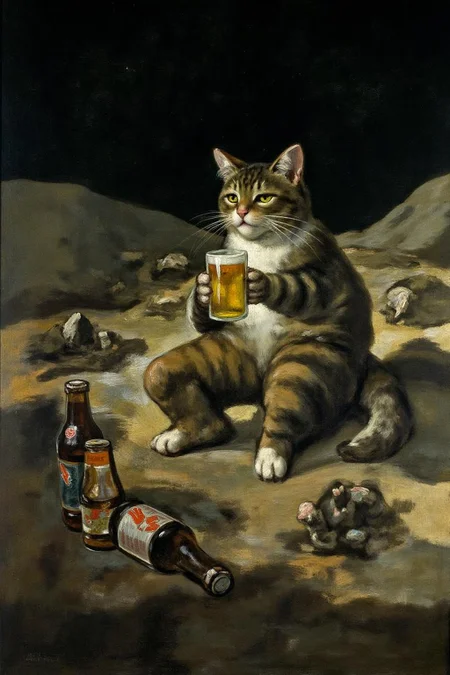
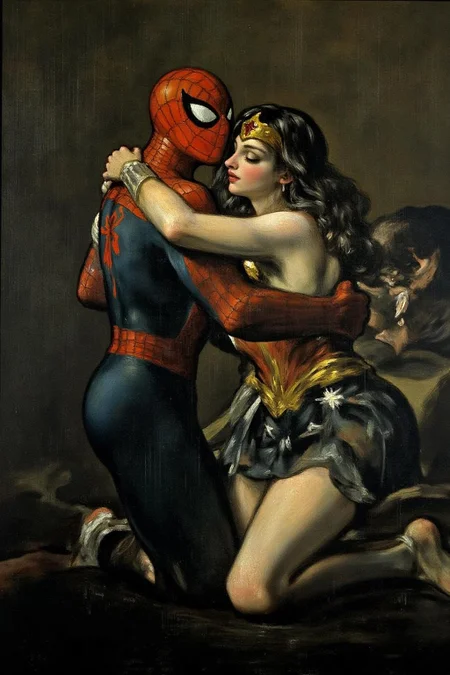
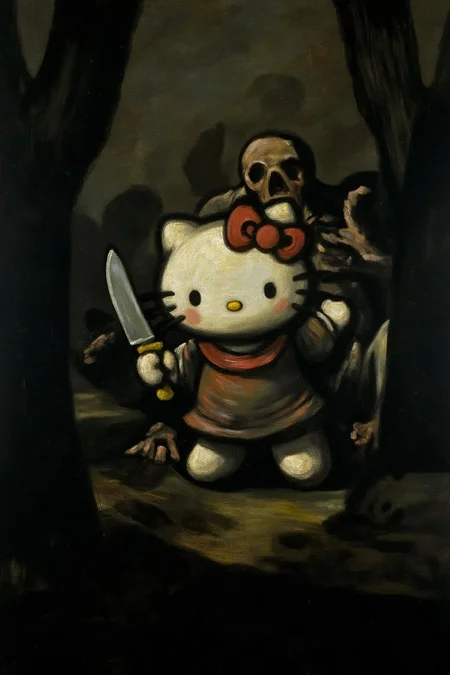
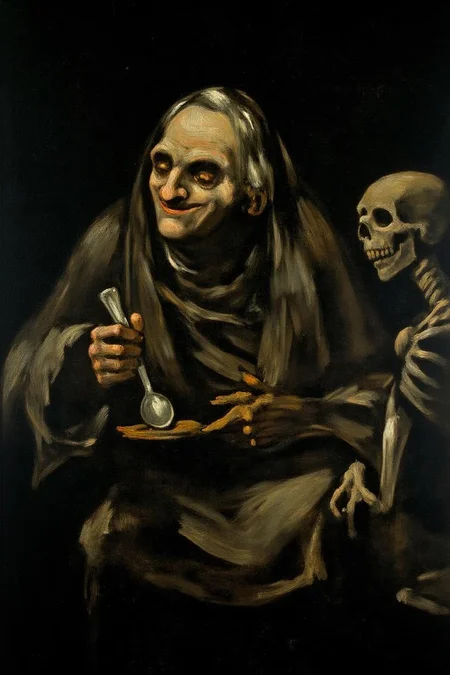

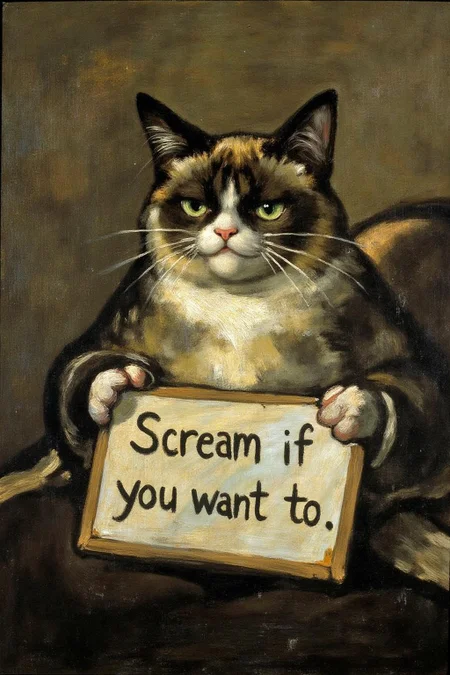
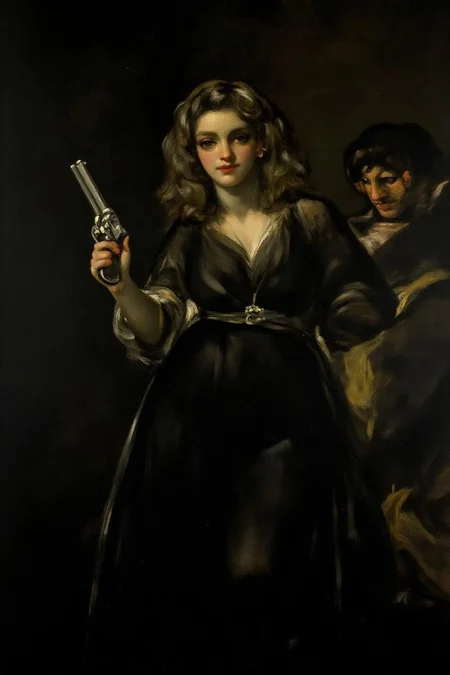
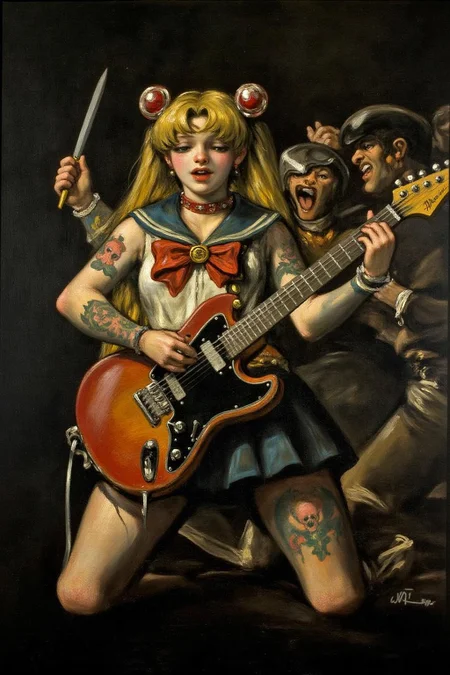
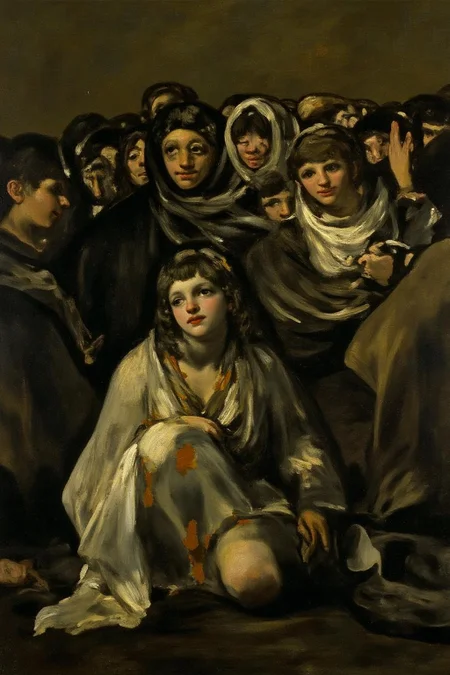
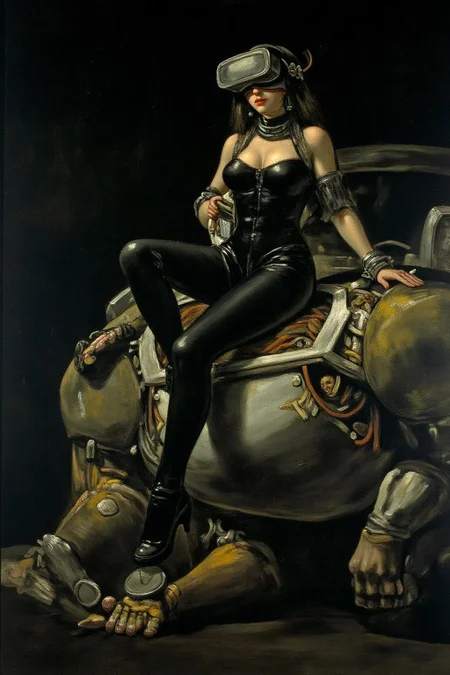
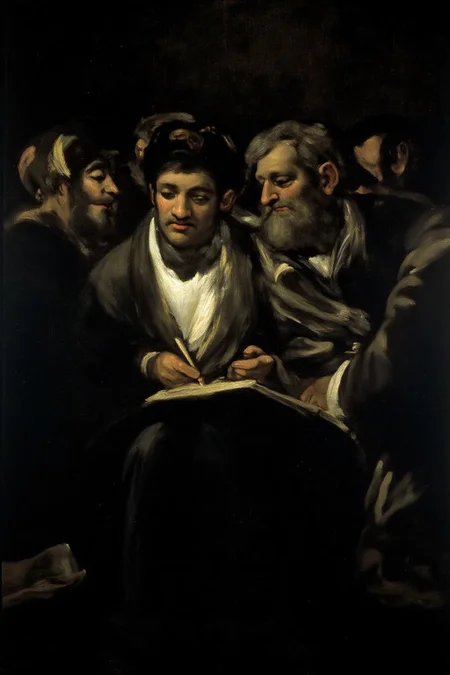
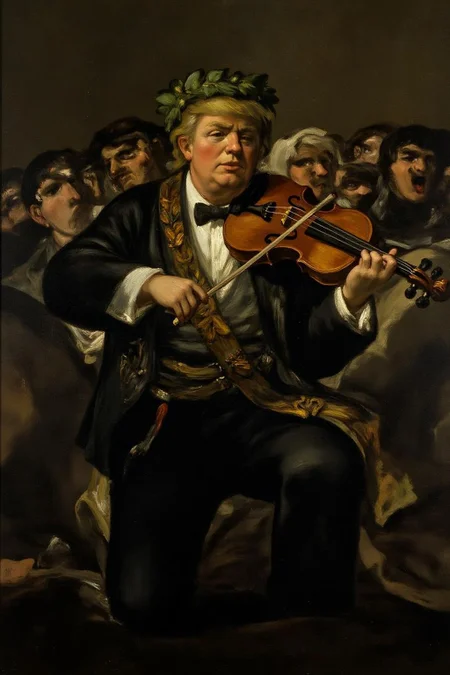
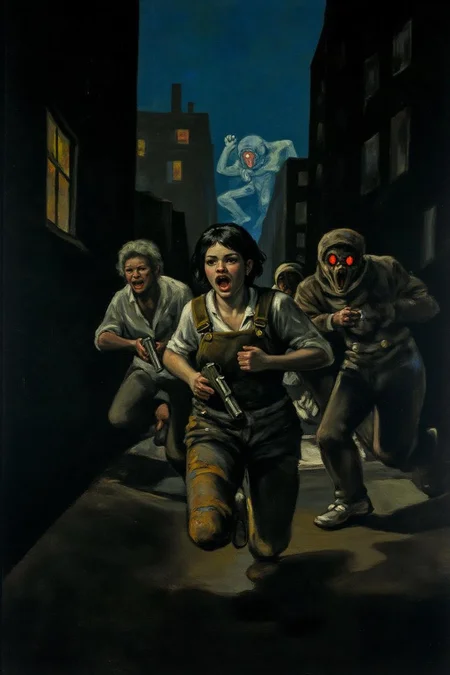
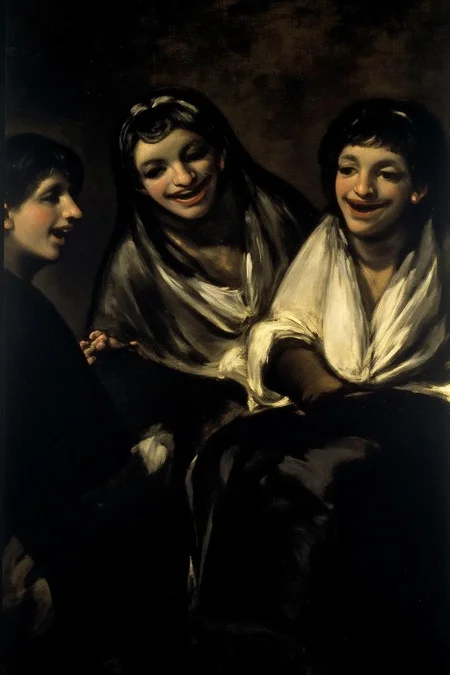
Trained on Pinturas negras (Black Paintings), Goya's famous mural paintings (as a bonus, with his equally famous The Third of May 1808 mixed in).
This is quite a departure from his court paintings, to say the least. If you don't want to see horror and grotesque images, please try this Goya LoRA instead 😅: https://civarchive.com/models/1113107/spanish-masters-francisco-goya-court-splendor-portrait-style
From ChatGPT:
Francisco Goya (1746–1828)
Francisco de Goya y Lucientes was a Spanish painter and printmaker, widely regarded as one of the most important and influential artists in Western art. His career spanned a turbulent era of European history, including the Enlightenment, the Napoleonic Wars, and the decline of the Spanish monarchy. Goya’s work evolved from elegant portraits and Rococo-influenced tapestry designs to harrowing depictions of war, social critique, and deeply personal expressions of human suffering.
Early Life
Birth and Background:
Born on March 30, 1746, in Fuendetodos, a small village in northern Spain.
He moved to Zaragoza as a child, where he began his artistic training.
Artistic Training:
Goya studied under José Luzán, a local painter, and later worked in Madrid with the artist Francisco Bayeu.
He traveled to Italy in 1771 to further his studies, where he was influenced by classical and Renaissance art.
Artistic Career
Tapestry Designs (1775–1792):
Early in his career, Goya worked for the Royal Tapestry Factory in Madrid, creating designs for tapestries to decorate royal palaces.
These works often depicted cheerful and lighthearted scenes of everyday Spanish life, such as The Parasol and The Blind Guitarist.
Court Painter:
Goya became a favorite of the Spanish court, serving as the official painter to King Charles IV and later Ferdinand VII.
He painted numerous portraits of the royal family and nobility, often with subtle psychological insight.
His famous The Family of Charles IV (1800–1801) presents a brutally honest depiction of the monarchy, with the royal figures appearing awkward and unidealized.
Personal Crisis and Deafness (1792):
In 1792, Goya suffered a severe illness that left him deaf, marking a turning point in his career.
His art grew darker and more introspective, reflecting his disillusionment with society and human nature.
War and Social Critique:
The Peninsular War (1808–1814), during which Napoleon’s forces invaded Spain, profoundly impacted Goya’s work.
His series of prints The Disasters of War (1810–1820) documented the brutality and suffering of the conflict, presenting harrowing images of violence and the inhumanity of war.
Black Paintings:
In the later years of his life, Goya painted a series of dark, haunting works directly on the walls of his home, known as the Black Paintings.
These works, such as Saturn Devouring His Son and The Dog, are characterized by their grim themes, raw emotion, and nightmarish imagery.
Artistic Style
Versatility:
Goya’s style evolved dramatically over his lifetime, from the Rococo elegance of his early works to the Romantic intensity of his later pieces.
He worked across various mediums, including oil painting, etching, and lithography.
Themes:
Social Critique: His works often explored the hypocrisies of the ruling class, the follies of human behavior, and the suffering of the oppressed.
War and Violence: Goya’s art starkly depicted the horrors of war, avoiding heroism and focusing on human suffering.
Inner Turmoil: His later works reflect his personal anguish and existential fears.
Innovations:
Goya is often considered a precursor to modern art for his unflinching exploration of dark and unconventional themes.
Key Works
The Third of May 1808 (1814):
Depicts the execution of Spanish civilians by French soldiers during the Napoleonic occupation.
The dramatic use of light and shadow highlights the humanity of the victims and the facelessness of the executioners.
The Sleep of Reason Produces Monsters (1799):
A famous print from his series Los Caprichos, exploring themes of superstition, ignorance, and the darker side of human nature.
Saturn Devouring His Son (c. 1820–1823):
A terrifying portrayal of the mythological god Saturn consuming one of his children, painted as part of the Black Paintings series.
The Family of Charles IV (1800–1801):
A group portrait of the Spanish royal family, noted for its psychological complexity and unflattering realism.
"The Nude Maja" and "The Clothed Maja" (c. 1797–1805):
Two iconic paintings of the same reclining woman, one nude and the other clothed, controversial for their time.
Legacy
Influence on Art:
Goya is often called the "father of modern art" for his innovative techniques and exploration of themes like war, fear, and human folly.
He influenced later artists such as Édouard Manet, Pablo Picasso, and the Surrealists.
Cultural Impact:
His works continue to resonate for their powerful depiction of universal human struggles and emotions.
Recognition:
Goya’s art is held in major collections worldwide, including the Prado Museum in Madrid, which houses many of his masterpieces.
Conclusion
Francisco Goya remains one of the most important figures in art history, celebrated for his technical brilliance, emotional depth, and ability to confront the darker aspects of human experience. His work serves as a bridge between the traditions of the old masters and the revolutionary ideas of modern art.
Description
This is epoch 12, rest are here: tensor. art/models/823837081978685844/Francisco-Goya-PN2-1024CapD6C5-2025-01-28-05:16:09-Ep-12
FLUX.1 - dev-fp8
Trigger: g0ya1 painting
Repeat: 20 Epoch: 12 (15 1024x1024 image for 3600 total steps)
Unet LR: 0.0005 Scheduler: cosine Optimizer: AdamW
Network Dim: 6 Alpha: 3
Epoch Loss
1 0.354
...
3 0.344
4 0.355 <
5 0.348
6 0.323
7 0.324
8 0.321 <- lowest
9 0.323
10 0.238 <
11 0.240
12 0.240
FAQ
Details
Files
Available On (1 platform)
Same model published on other platforms. May have additional downloads or version variants.