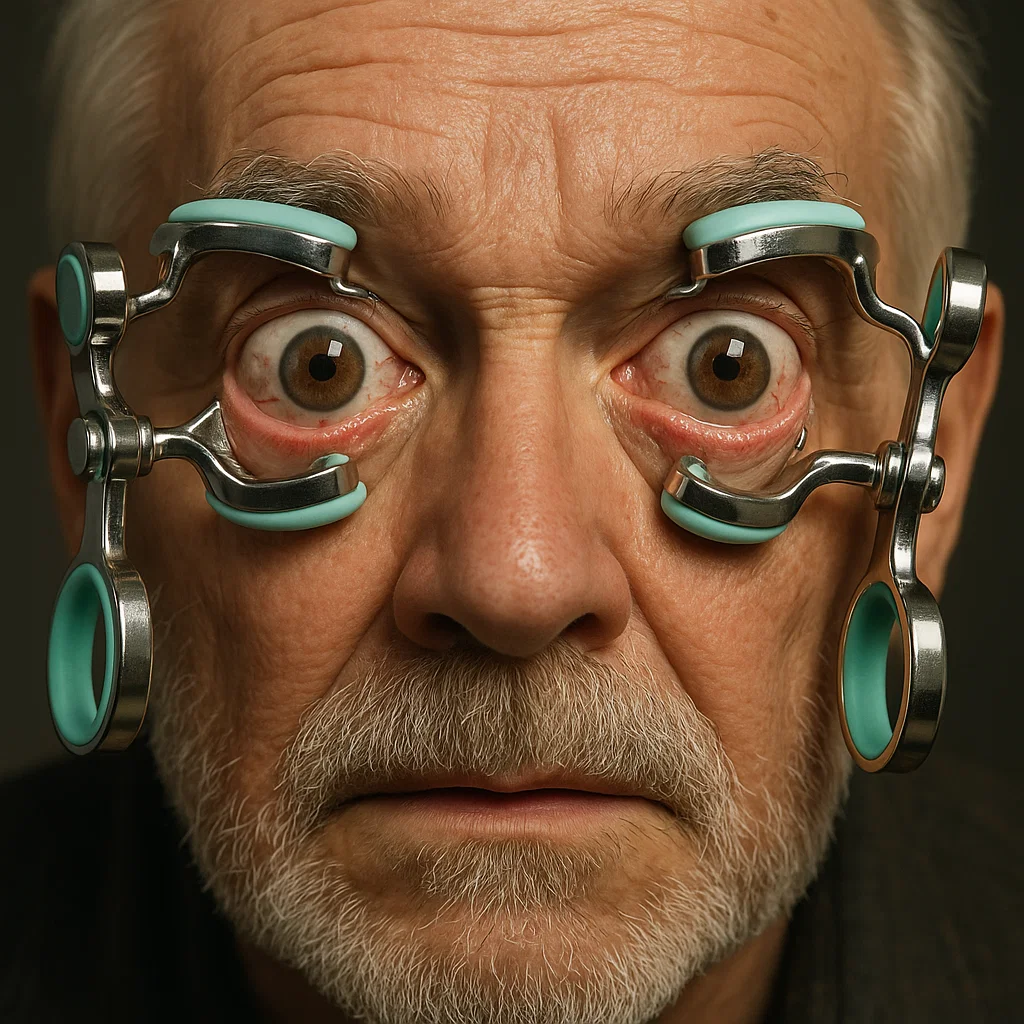
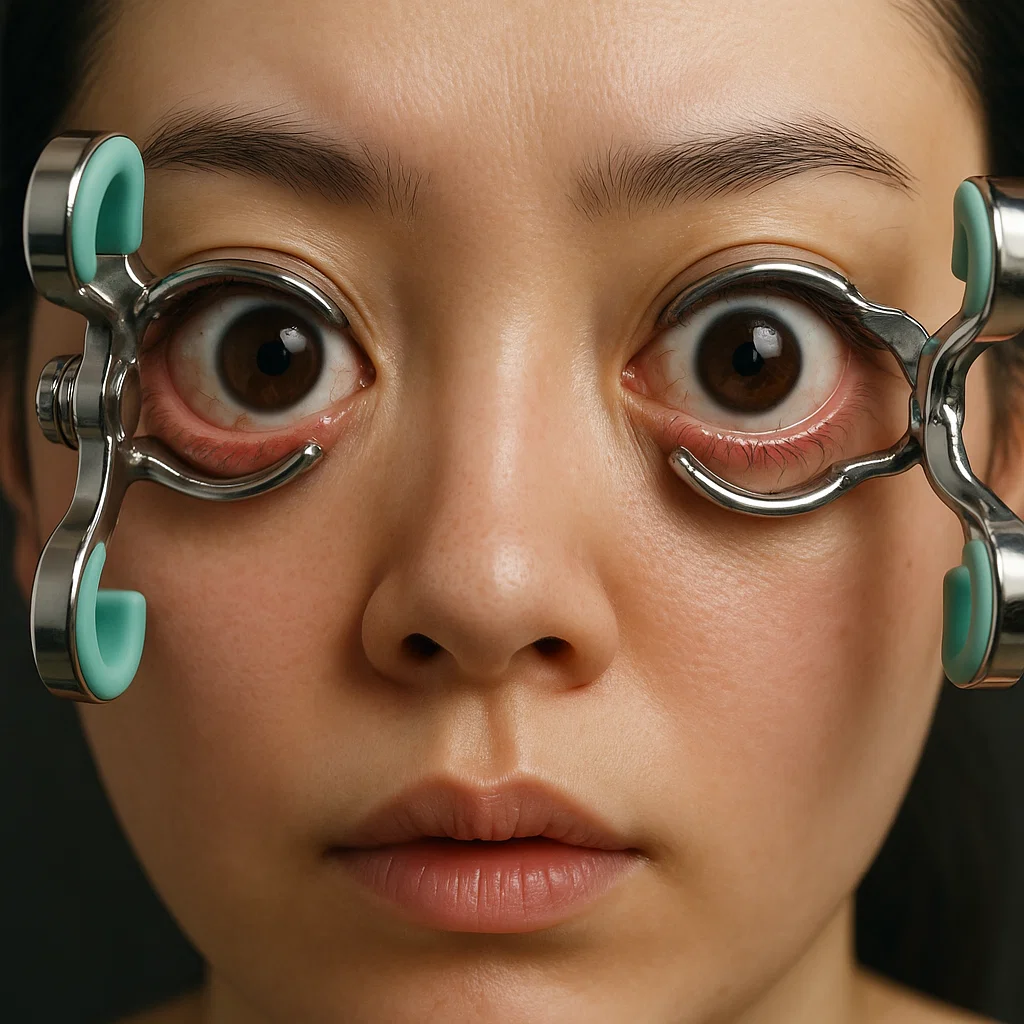
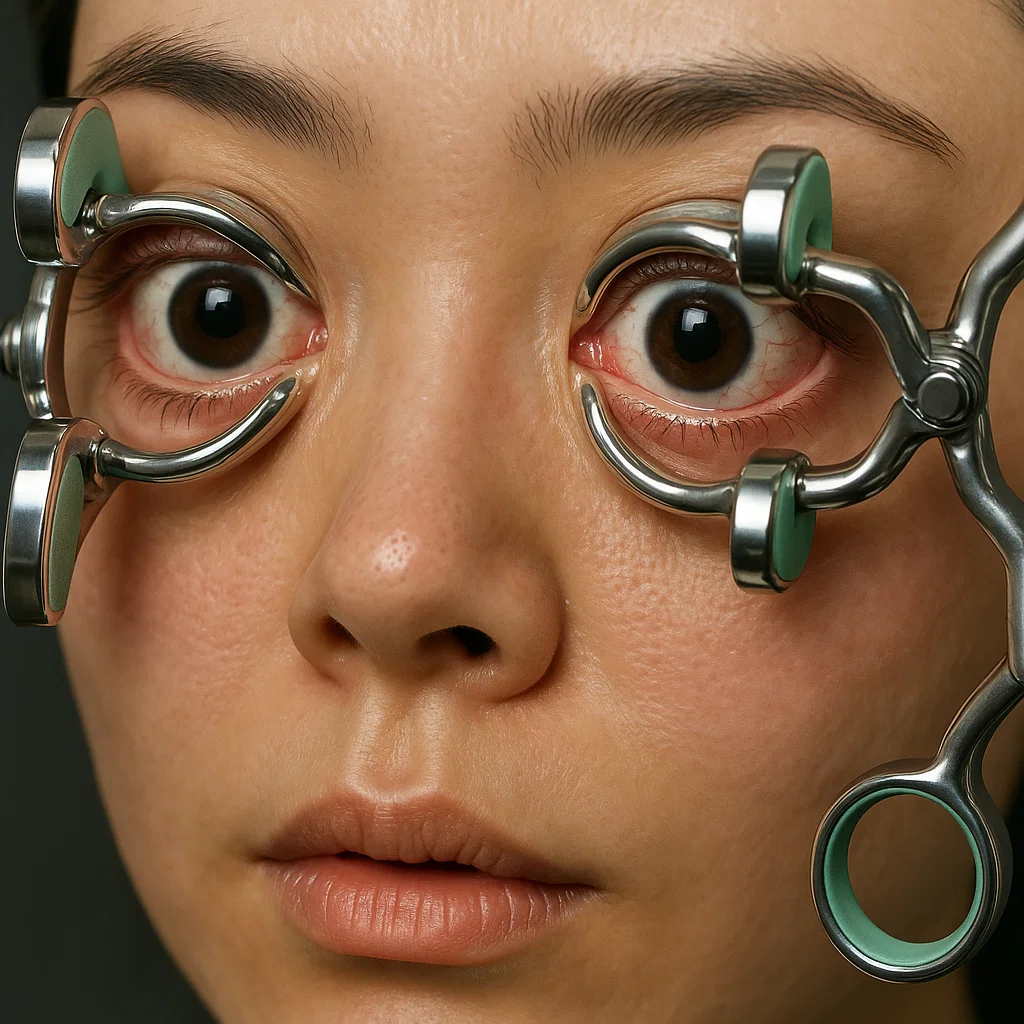
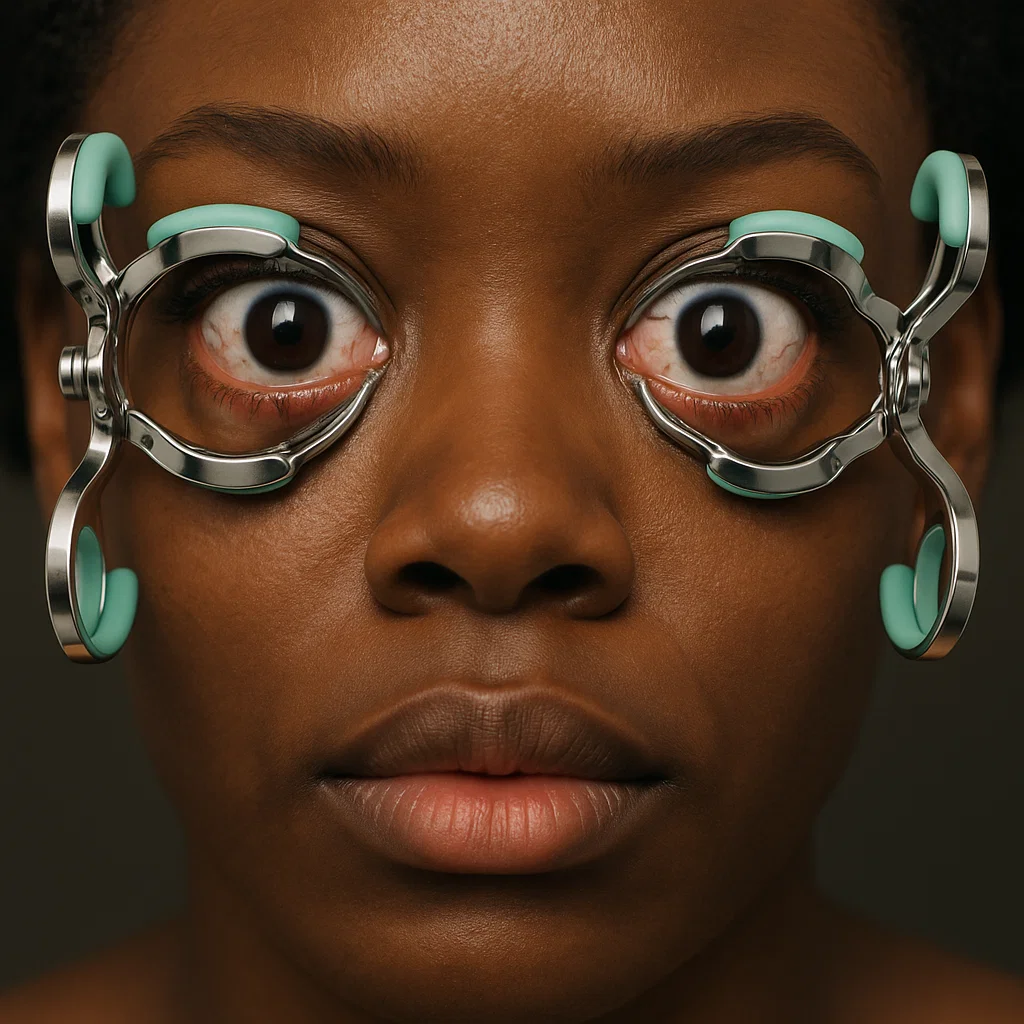

Here is a structured tag system you can use for training your LoRA based on the concept of an eyelid-opening tool with veiny eyes, inner eyelid exposure, and macro realism.
🏷️ Common Tags (apply to every image):
These define the shared concept across your dataset:
sqlCopyEditrealistic, macro shot, close-up, female face, shiny metal tool, eyelid tool, eye focus, detailed eye, moist eyes, visible sclera veins, pink inner eyelids, realistic skin texture, soft lighting, high detail
🏷️ Special Tags (per image variant):
Use these to distinguish specific scenes/variants within your dataset:
1. Single Eye Opened
perlCopyEditone eye held open, single tool use, asymmetrical face shot
2. Both Eyes Opened with One Tool
sqlCopyEditboth eyes held open, one tool holding both eyelids, symmetrical eye opening
3. Different Tool Types
- Standard metal tool: stainless steel tool
- Plunger-like tool: rubber-tipped tool, plunger tool
- Fantasy version: fantasy eyelid opener, decorative tool
4. Expression or Mood Variants
- Neutral face: blank expression, calm face
- Subtle discomfort: tense expression, wide eyes, strained eyelids
5. Lighting or Style Differences
- Studio setup: studio lighting, even illumination
- Medical realism: clinical lighting, diagnostic tool look
- Moody shot: dramatic shadows, high contrast close-up
📁 Recommended File Naming Structure:
Use this for clean dataset organization:
python-replCopyEditopen_eye_tool_01_both_eyes_studio.jpg
open_eye_tool_02_one_eye_moody.jpg
open_eye_tool_03_plunger_variant.jpg
open_eye_tool_04_pink_inner_eyelid.jpg
...
🧠 Bonus: Training Trigger Word
If you're training a LoRA just for this concept, consider setting a trigger tag like:
nginxCopyEditeye_stretch_tool
This will allow you to summon the effect during inference by simply prompting with that word.
Description
Here is a structured tag system you can use for training your LoRA based on the concept of an eyelid-opening tool with veiny eyes, inner eyelid exposure, and macro realism.
🏷️ Common Tags (apply to every image):
These define the shared concept across your dataset:
sqlCopyEditrealistic, macro shot, close-up, female face, shiny metal tool, eyelid tool, eye focus, detailed eye, moist eyes, visible sclera veins, pink inner eyelids, realistic skin texture, soft lighting, high detail
🏷️ Special Tags (per image variant):
Use these to distinguish specific scenes/variants within your dataset:
1. Single Eye Opened
perlCopyEditone eye held open, single tool use, asymmetrical face shot
2. Both Eyes Opened with One Tool
sqlCopyEditboth eyes held open, one tool holding both eyelids, symmetrical eye opening
3. Different Tool Types
- Standard metal tool: stainless steel tool
- Plunger-like tool: rubber-tipped tool, plunger tool
- Fantasy version: fantasy eyelid opener, decorative tool
4. Expression or Mood Variants
- Neutral face: blank expression, calm face
- Subtle discomfort: tense expression, wide eyes, strained eyelids
5. Lighting or Style Differences
- Studio setup: studio lighting, even illumination
- Medical realism: clinical lighting, diagnostic tool look
- Moody shot: dramatic shadows, high contrast close-up
📁 Recommended File Naming Structure:
Use this for clean dataset organization:
python-replCopyEditopen_eye_tool_01_both_eyes_studio.jpg
open_eye_tool_02_one_eye_moody.jpg
open_eye_tool_03_plunger_variant.jpg
open_eye_tool_04_pink_inner_eyelid.jpg
...
🧠 Bonus: Training Trigger Word
If you're training a LoRA just for this concept, consider setting a trigger tag like:
nginxCopyEditeye_stretch_tool
This will allow you to summon the effect during inference by simply prompting with that word.