

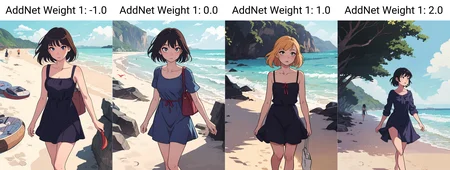
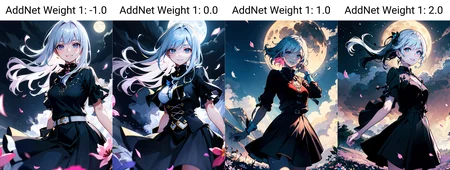
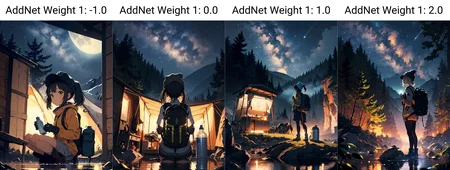
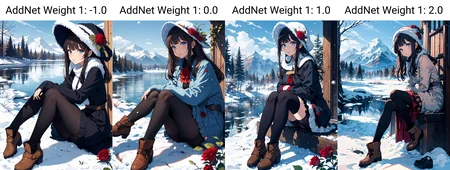
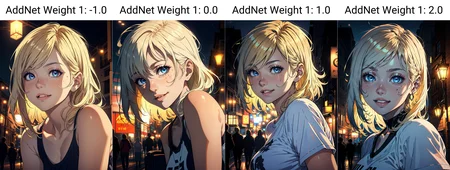
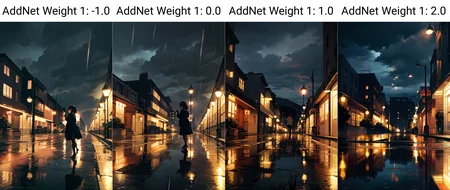
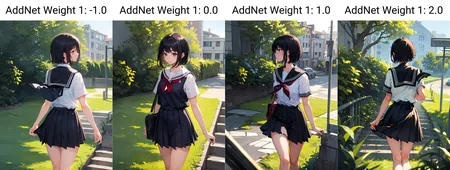
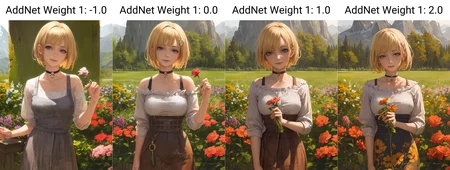

This model is meant to enhanced the complexity and prominence of your backgrounds. It's made by combining background-focused loras and then target isolating blocks to reduce the effect on things like style, clothing, coloring, anatomy, or facial details.
In practice it's a bit finicky. The primary observed effect it that without any tags for shot distance, it will make your background take up more space. It won't necessarily make your background better, persay, but will increase the number of visible background elements, their density, and their prominence. In the case of images where you want one extremely prominent backdrop or you want your character to be silhouetted against the backdrop it actually might be better not to prompt it or prompt it negative, as prompting it negative will creat the opposite effect. Because of the way it's block isolated, you can prompt it at strong weights without it making your picture look like a complete mess. I recommend toying with both positive and negative weights if you decide to use it, as both create interesting outcomes.
If you prompt for an image that only has landscape/scenery, prompting it will increase coherency. Likewise, negative prompting it will make the landscape make less sense. Both have their own uses.
Description
dpep4-768:1,0,0,0,1,1,0,0,0,0,0,1,1,1,1,0,0 + silicon-landscape-isolation:1:1,0,0,0,1,1,0,0,0,0,0,1,1,1,1,0,0
FAQ
Comments (2)
Dear Author.
I operated with a weight of <lora:BG2_dpep4+silicon29dim64:4>, which I would not have expected.
I uploaded it because I was impressed by the composition I wanted, which was either a nice picture with faded shadows or flowers in full bloom.
As the author himself says, the behavior of this LORA itself was difficult or insufficient, but in my experience, it was the first great LORA that withstood too heavy weight and provided another interesting experience.
In other words, good job.
wish you made a comparison image with both versions