
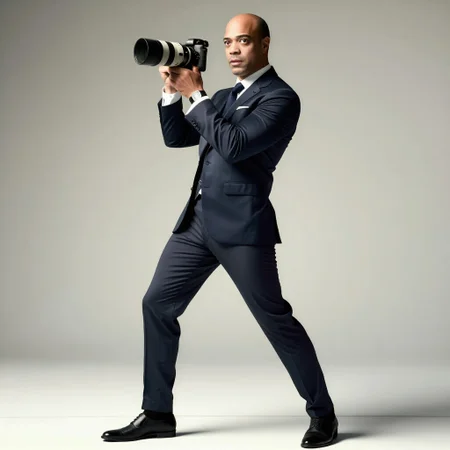

The Myth of Pavlaki, Son of Light and Echo
Long before mortals marked time in centuries, when the gods still wandered unseen among poets and dreamers, there was a place between Olympus and the mortal world called The Interstice—a realm where ideas took form and art breathed like a living creature.
It was there that Pavlaki was born.
Not from a single god, but from a rare convergence.
They say his mother was Euterpe, Muse of music—her breath the origin of melody, her laughter the rhythm of life itself. His father, however, is debated among the oldest scrolls. Some claim he was touched by Apollo, god of light, truth, and artistry. Others insist he was shaped by Hermes, trickster and messenger, giver of wit and restless curiosity. The most ancient philosophers whisper something stranger still—that Pavlaki was formed from both light and shadow, a child not of lineage, but of balance.
The Child Who Painted with Light
Even as an infant, Pavlaki did not see the world as others did.
Where mortals saw people, he saw stories layered upon flesh—joy and grief etched in subtle gestures, hidden histories living in posture and expression. His first creations were not drawings, but impressions: bending sunlight through glass, shaping shadows against stone, casting silhouettes that told stories no words could.
Euterpe taught him music, but Pavlaki twisted melody into something more. He could turn song into emotion visible, a harmony that painted itself across the air.
Apollo, intrigued, gifted him a fragment of divine radiance—a spark that would let Pavlaki paint with light itself.
But from the darker corners of the world, he learned the opposite craft: painting with shadow, pulling contrast from absence, giving depth to what others ignored.
The Wanderer of Forms
Unlike the gods, Pavlaki refused permanence.
He became fascinated with the mortal experience—not just observing it, but living it. Hermes, amused, granted him a peculiar blessing:
“You shall wear identity as others wear garments.”
With this, Pavlaki could become countless forms—not in body alone, but in essence. He could embody a king’s burden, a worker’s fatigue, a lover’s longing, a fool’s humor.
He walked among mortals as many:
A traveling musician whose songs could quiet grief
A philosopher who debated under olive trees until sunrise
A historian who recorded not events, but feelings beneath events
An artist capturing the human form with impossible honesty
Each identity became part of him. Each life, another brushstroke.
The Laughter That Defied the Fates
The Fates—Clotho, Lachesis, and Atropos—grew wary.
To them, every life had a defined thread. But Pavlaki blurred those lines. He did not simply live a destiny—he borrowed fragments of many, weaving something unpredictable.
Yet what unsettled them most was not his defiance.
It was his joy.
Pavlaki laughed easily—sometimes at the absurdity of gods, sometimes at himself, often at the strange beauty of mortal mistakes. His humor was never cruel. It lifted, softened, healed.
Mortals who encountered him left changed. Not because he solved their problems, but because he reminded them:
“You are already a masterpiece in motion.”
The Keeper of Human Truth
Over centuries, Pavlaki became something beyond artist or wanderer.
He became a collector of humanity.
Not objects—but moments:
A glance between strangers that almost became love
The quiet dignity of grief
The resilience hidden in ordinary lives
He preserved these in works no temple could hold—images sculpted from light, shadow, and texture that seemed to breathe.
The gods themselves began to study his work.
The Final Gift
It is said Pavlaki still walks the world, though rarely recognized.
He appears wherever spirit is dimming—where someone has forgotten their own light. He does not preach. He does not command.
He creates.
A portrait. A moment. A reflection.
And in that creation, people see themselves again—not as they fear they are, but as something deeper, richer, more alive.
Legacy
The philosophers of old eventually gave him a title:
Pavlaki, The Living Canvas
The One Who Becomes, So Others May Remember Who They Are
And though no temple honors him, his influence endures wherever art, humor, and humanity intersect.
Because Pavlaki’s true gift was never transformation.
It was revelation.
Description
Looks like we don't have an active mirror for this file right now.
CivArchive is a community-maintained index — we catalog mirrors that volunteers upload to HuggingFace, torrents, and other public hosts. Looks like no one has uploaded a copy of this file yet.
Some files do get recovered over time through contributions. If you're looking for this one, feel free to ask in Discord, or help preserve it if you have a copy.