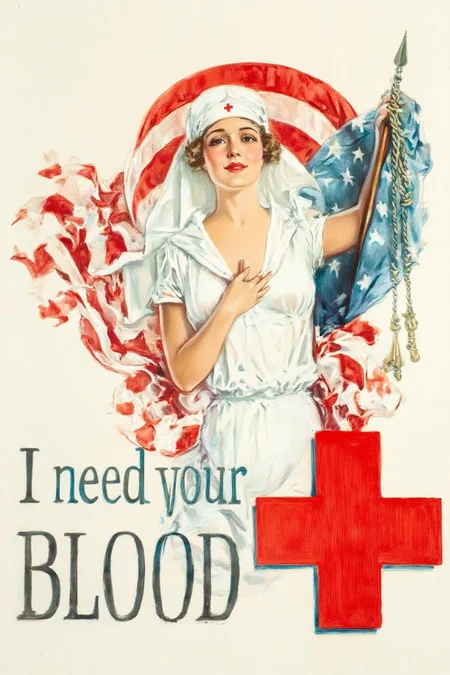
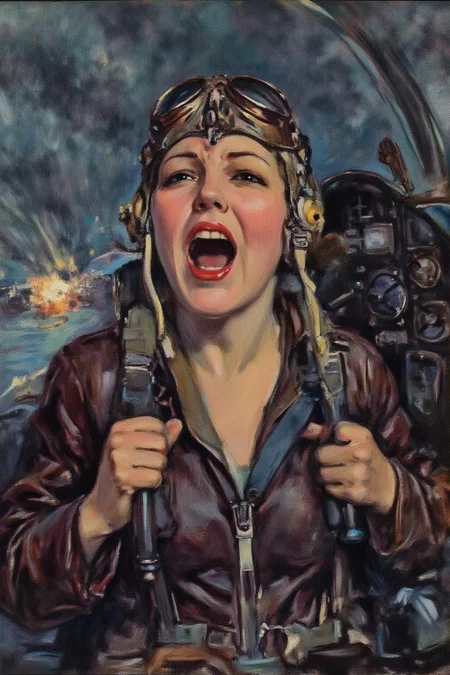
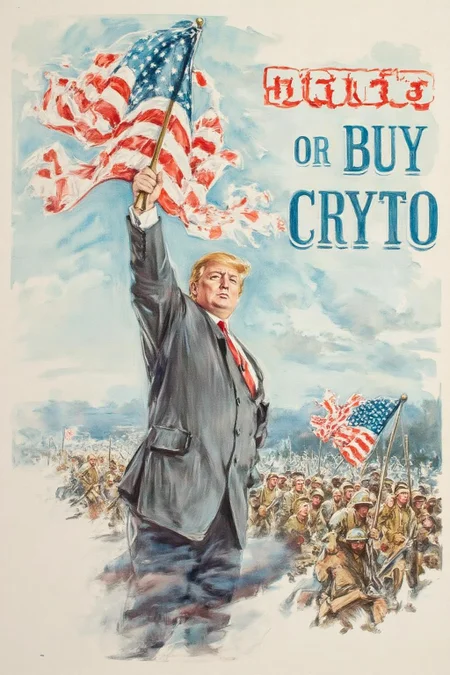
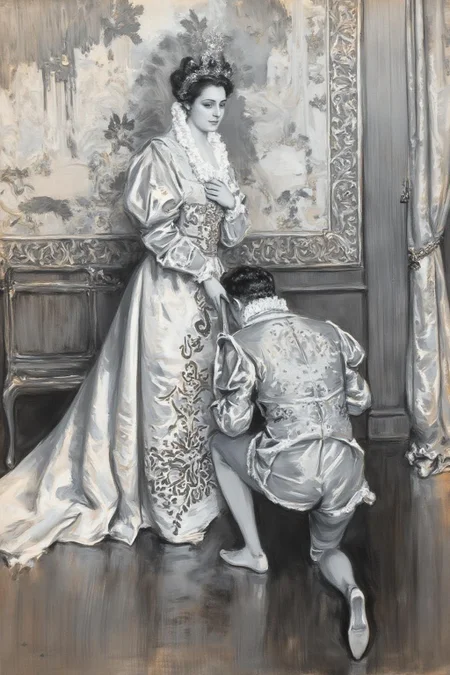
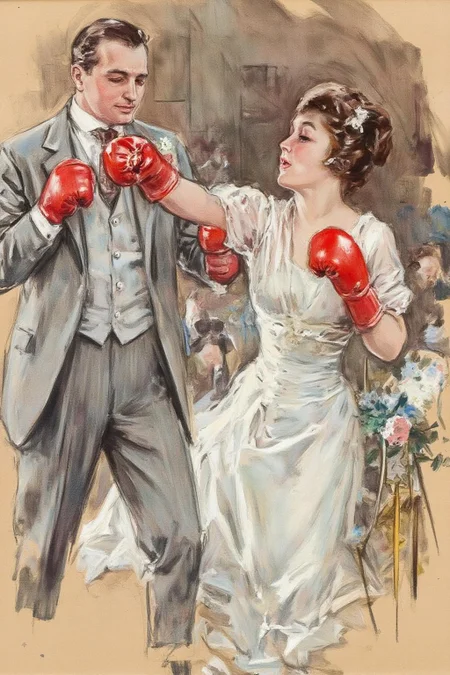
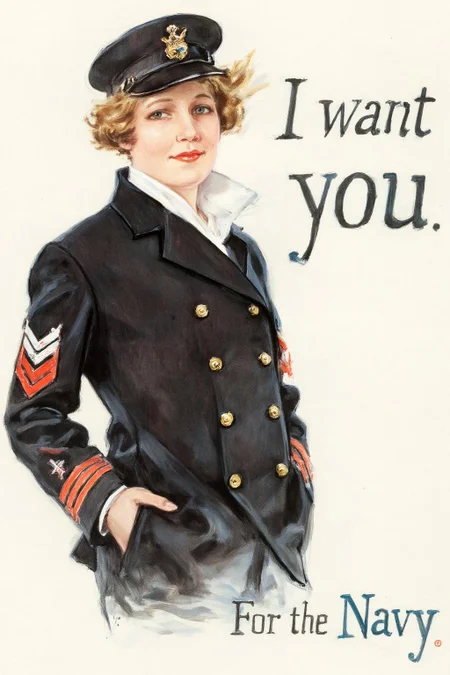
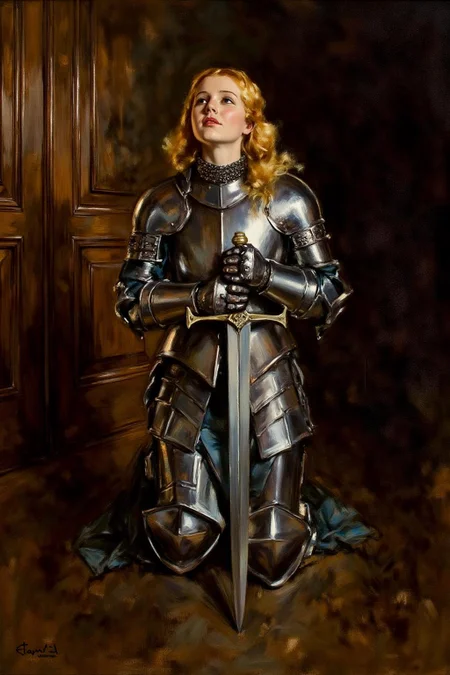

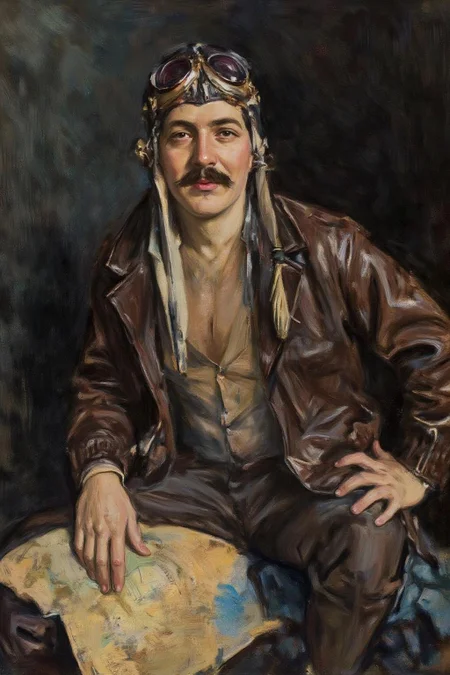
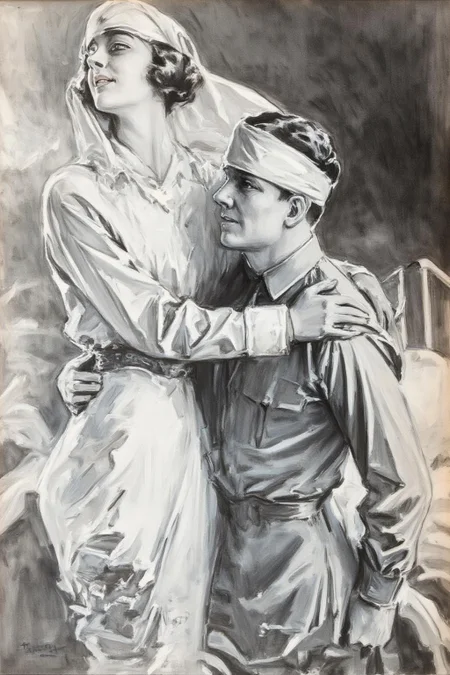
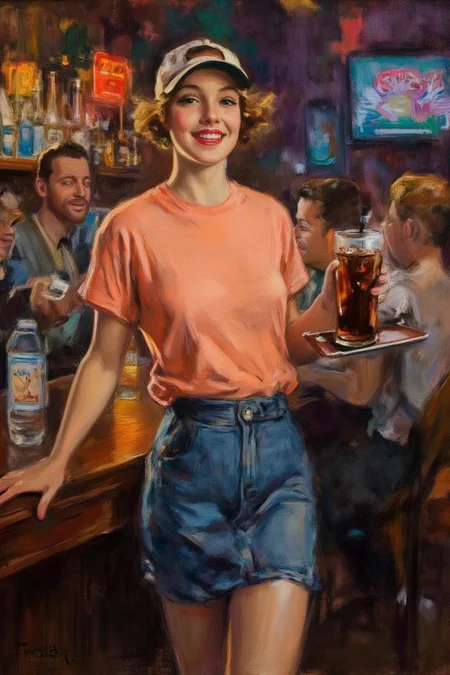
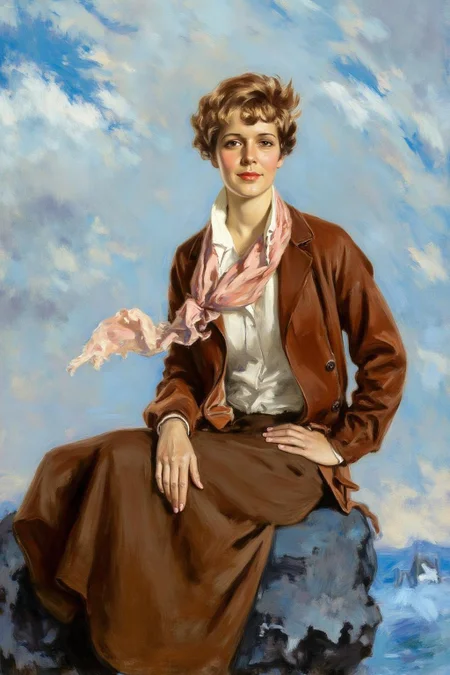
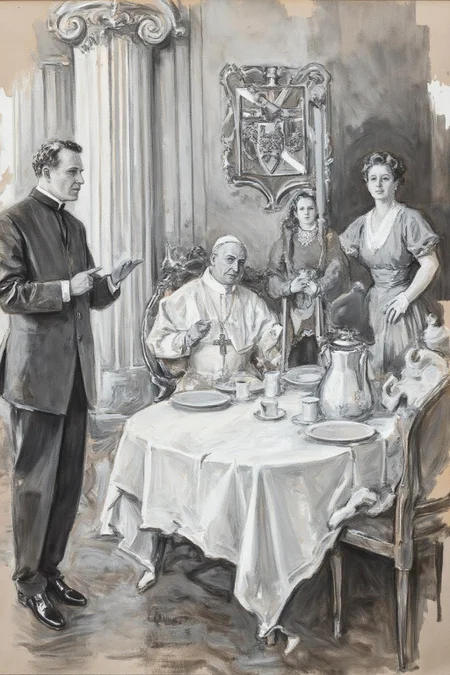
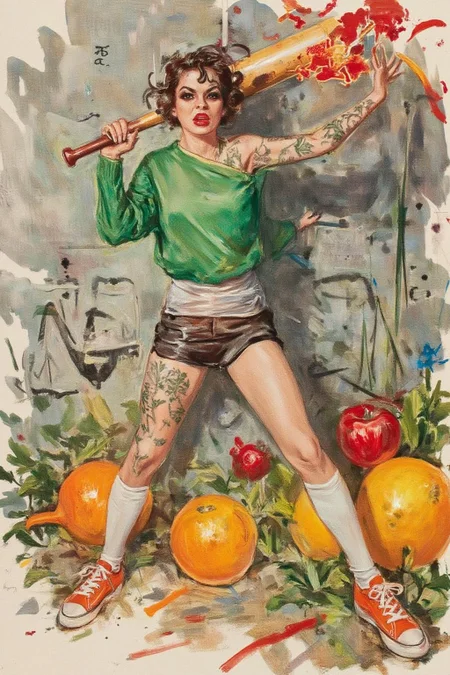
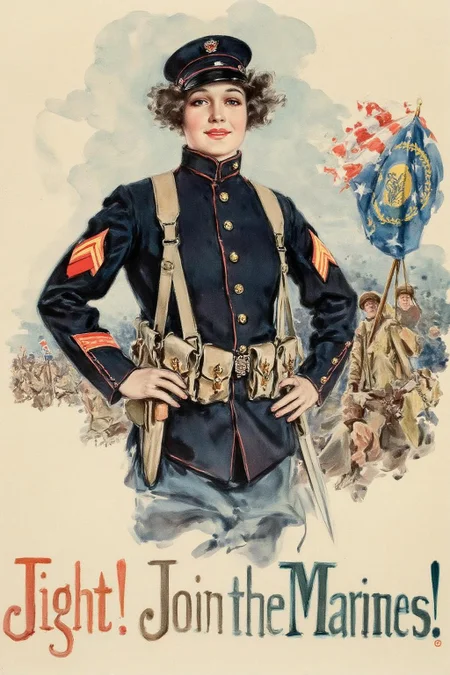
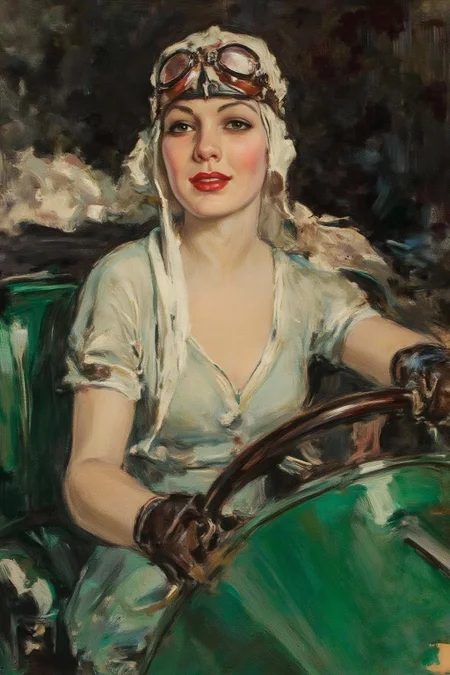

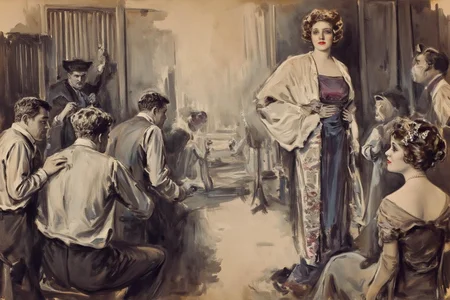
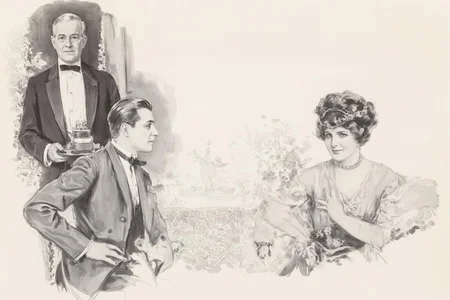
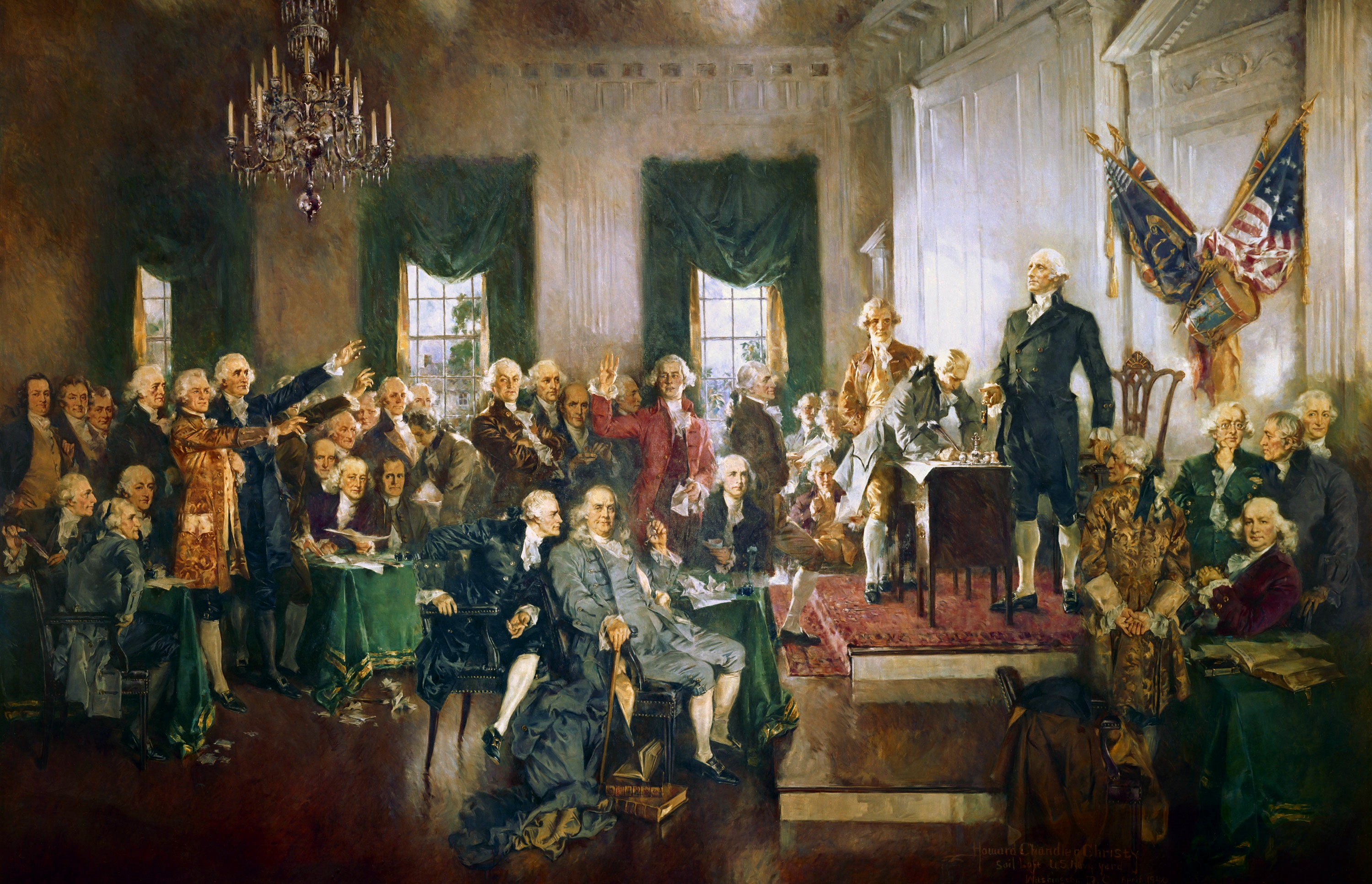
Trained on 34 illustrations and paintings by the American artist Howard Chandler Christy (January 10, 1872 – March 3, 1952). He was an artist and illustrator. Famous for the "Christy Girl" – a colorful and illustrious successor to the "Gibson Girl" – Christy is also widely known for his iconic WWI military recruitment and Liberty loan posters, along with his 1940 masterpiece titled, Scene at the Signing of the Constitution of the United States, which is installed along the east stairwell of the United States Capitol. To see his works, please go to en.wikipedia.org/wiki/Howard_Chandler_Christy#Gallery
Usage tip: lower the Guidance to 2.5 if you want to have a "rougher/more painterly" texture.
From ChatGPT:
 Christy in 1922
Howard Chandler Christy (January 10, 1872 – March 3, 1952) was a prolific American illustrator and portraitist, best known for his iconic “Christy Girl,” a symbol of feminine beauty, independence, and American patriotism in the early 20th century. His work straddled the worlds of fine art, illustration, and propaganda, making him one of the most recognizable visual voices of his era.
🎨 Artistic Background & Career Highlights
Early Training: Christy studied at the Art Students League of New York and under William Merritt Chase, whose influence is visible in Christy’s painterly style and attention to elegance.
Spanish–American War: He gained early fame as a combat artist, creating romanticized illustrations of soldiers and military scenes for magazines like Scribner’s and Harper’s Weekly.
"Christy Girl" (c. 1900s–1920s):
A patriotic, stylish, confident young woman who was softer and more approachable than Gibson’s "Gibson Girl".
Often appeared in recruitment posters, magazine covers, and advertisements.
Became a cultural icon during WWI, representing the idealized American woman.
🧑🎨 Artistic Style
Romantic Realism: Christy balanced realism with idealism, emphasizing soft lighting, flowing lines, and glamorous detail.
Painterly Technique: Despite his illustrative subjects, his use of oil paints and luminous brushwork often mirrored fine art portraiture.
Portraiture: Later in life, he became a sought-after society portraitist, painting presidents (e.g., Calvin Coolidge, Harding), celebrities, and socialites.
📜 Notable Works
WWI Recruitment Poster: Gee!! I Wish I Were a Man, I’d Join the Navy (1917) – bold, flirtatious, and persuasive.

Capitol Mural: The Signing of the Constitution of the United States (1940), displayed in the U.S. Capitol – a vast historical work that cemented his status as a national painter.

Portraits of Presidents: Including Franklin D. Roosevelt and Herbert Hoover.
🌟 Cultural Impact & Legacy
Visual Shaper of Early 20th-Century America: Christy’s women were aspirational yet accessible, and his depictions of American ideals helped shape public perception during wartime and the Roaring Twenties.
Bridge Between Illustration and Fine Art: Like Charles Dana Gibson and Norman Rockwell, Christy was a master at blurring the boundaries between commercial and high art.
Influence on Modern Pin-Up & Glamour Art: His blend of sophistication and allure prefigured later pin-up artists like Gil Elvgren and Alberto Vargas.
Would you like suggestions for modern artists inspired by Christy or a breakdown of how the “Christy Girl” evolved visually over time?
🧁 Evolution of the “Christy Girl” in Visual Culture
The “Christy Girl” was more than just a pin-up—she was a cultural icon who evolved with American identity, influencing decades of visual tropes in art and advertising.
🕰️ Timeline of Evolution
1900s–1910s: The Debutante Ideal
Flirty but wholesome.
Embodied grace, patriotism, and elegance during the Gilded Age and Progressive Era.
Compare with Gibson Girl—more approachable, less aloof.
WWI Era: The Patriot
In posters like “Gee!! I Wish I Were a Man…,” she takes on bolder, assertive roles.
Still fashionable and feminine but assertive, confident, and engaging.
1920s–1930s: Flapper Influence & Society Portraits
As society changed, so did she: bobbed hair, modern clothes, and an air of sophistication.
Transitioned from romantic magazine covers to formal portraiture of real socialites.
Mid-Century: Legacy Through Pin-Up
The Christy Girl directly influenced the rise of pin-up culture (Vargas, Petty, Elvgren).
Her blend of confidence and idealized beauty lived on in wartime posters and calendar art.
Today: The Christy Spirit in Media
From Disney princesses to vintage fashion photography, the idealized, approachable glamour of the Christy Girl still appears in modern media.
🎨 Modern Artists Influenced by Howard Chandler Christy
Many contemporary illustrators and painters draw inspiration—directly or stylistically—from Christy’s blend of glamour, patriotism, elegance, and narrative romanticism:
1. Olivia De Berardinis
Known for glamorous pin-up art.
Her sensual, elegant portrayals of women echo the sophistication and idealized femininity of the Christy Girl.
2. Greg Hildebrandt
While better known for fantasy and sci-fi, his American Beauties series (glamorous Americana-themed pin-ups) recalls Christy’s aesthetic.
3. David Downton
Fashion illustrator who channels the grace and minimal linework that Christy used, especially in his later portraiture and advertising work.
4. Audrey Kawasaki
Though more stylized and modern, her focus on feminine beauty, soft palettes, and flowing lines suggests a spiritual connection to Christy’s women.
5. Jason Edmiston
Known for hyperreal renderings and vintage poster vibes; Christy’s drama and theatricality echo in his commercial portraiture and pulp-inspired work.
Description
This is epoch 11. Other epochs can be found at tensor.art/models/865834080724347914/Howard-Chandler-ChristyP1-Cp85-2025-05-18-22:31:20-Ep-11
FLUX.1 - dev-fp8
Trigger: howardchandlerchristy1 illustration
Repeat: 20 Epoch: 5 (Trained on 36 512x512 images, 3600 total steps)
Then trained for another 6 epochs at 1024x1024 with 34 images for 7680 total steps.
Unet LR: 0.0005 Scheduler: cosine Optimizer: AdamW
Network Dim: 8: Alpha: 4
Epoch Loss
1 0.405
2 0.398
3 0.385
4 0.369
5 0.371<
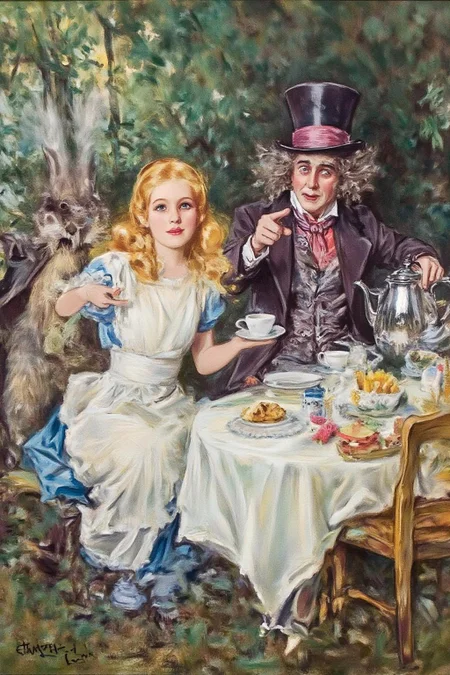
howardchandlerchristy1 illustration. Three characters sitting at a table at a tea party in the forest. In the center is Alice in Wonderland, a girl with long blonde hair in a dress and white apron holds a teacup. On the right is the Mad Hatter, a man with wild hair and a tall hat, in a suit, holding a teapot and gesturing with his finger, pointing to the left. On the left is an anthropomorphic Rabbit, smoking.
Removed two images so now training with 34 image for 1024x1024 training:
Unused2/007.jpeg
Unused2/021.jpeg
6 0.361
7 0.352
8 0.348
9 0.354<
howardchandlerchristy1 illustration. A woman with dark shoulder-length hair styled in soft waves, in a white blouse with a high collar and a dark skirt, holding a large, waving American flag. Her hair is in soft curls. She is looking at the viewer.
10 0.354<- lowest
11 0.355
howardchandlerchristy1 illustration. A woman dressed as a Catwoman, sitting on a park bench at night. She is smoking. There is a muscular Space Marine sitting beside her.