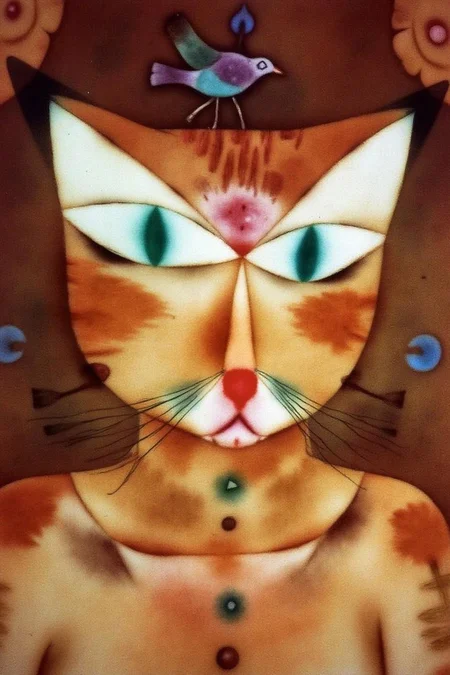
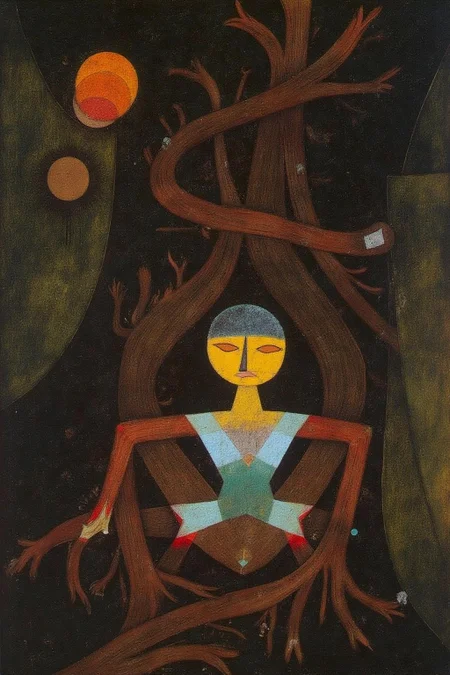

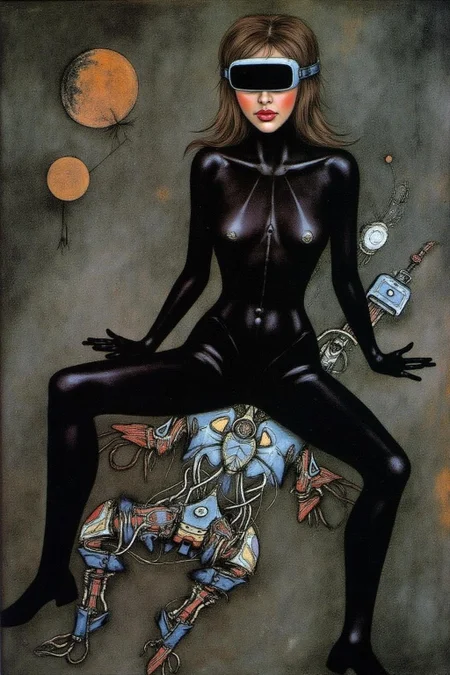
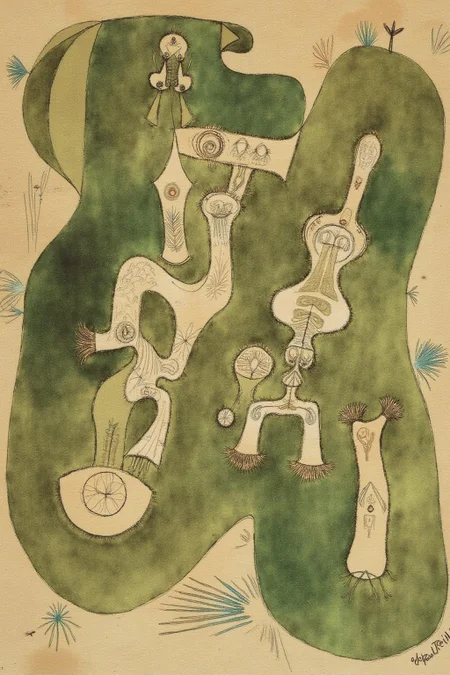

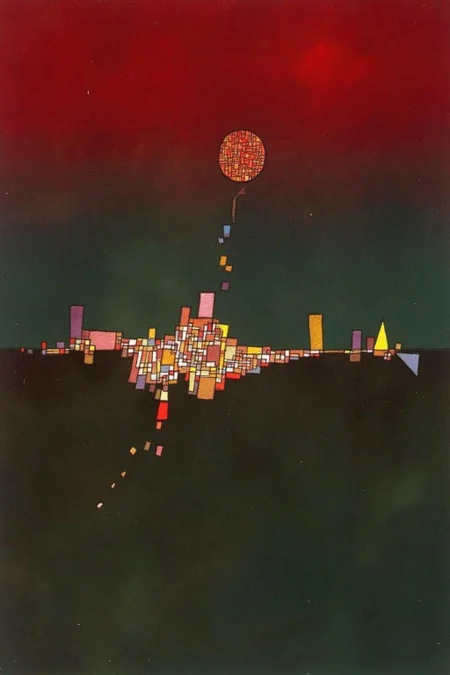
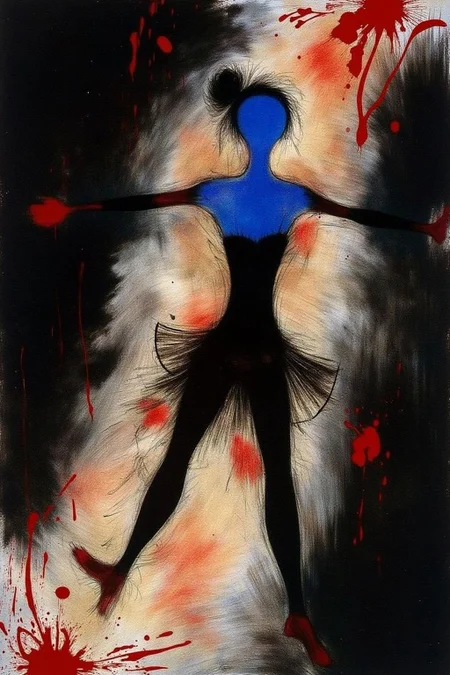
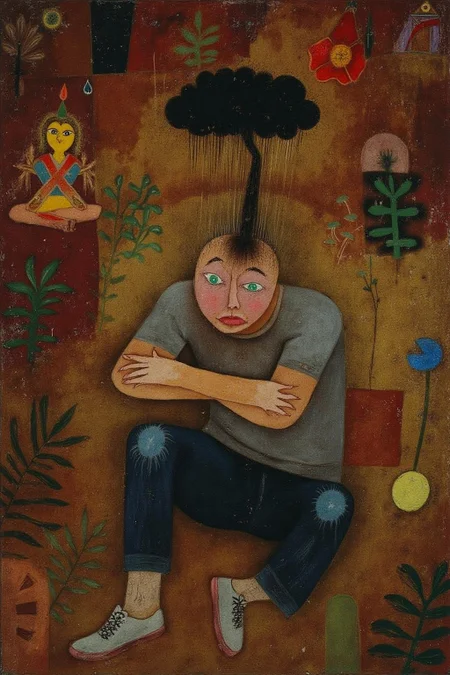
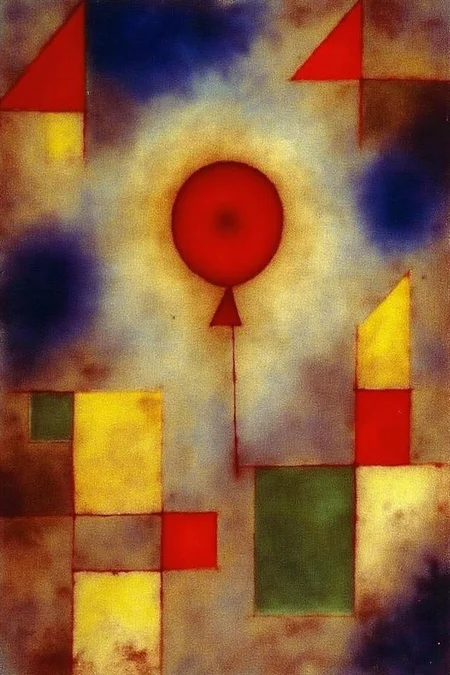
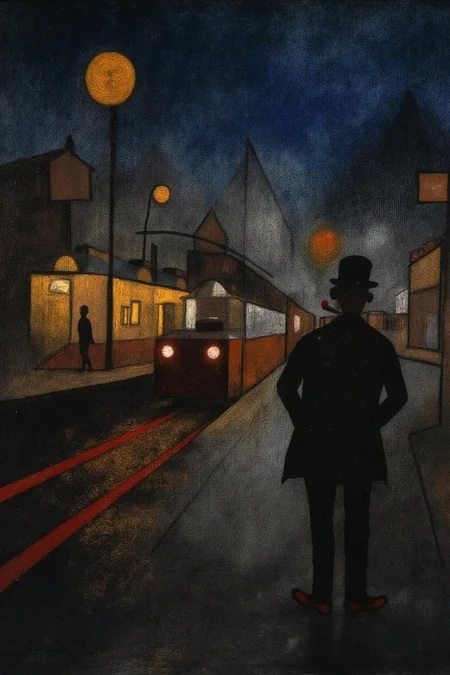
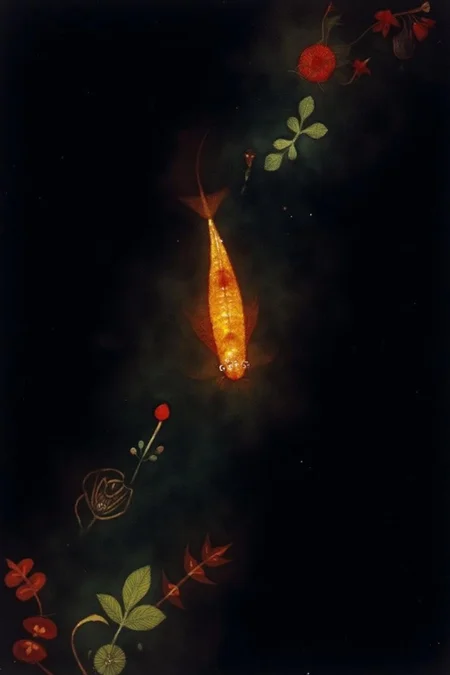
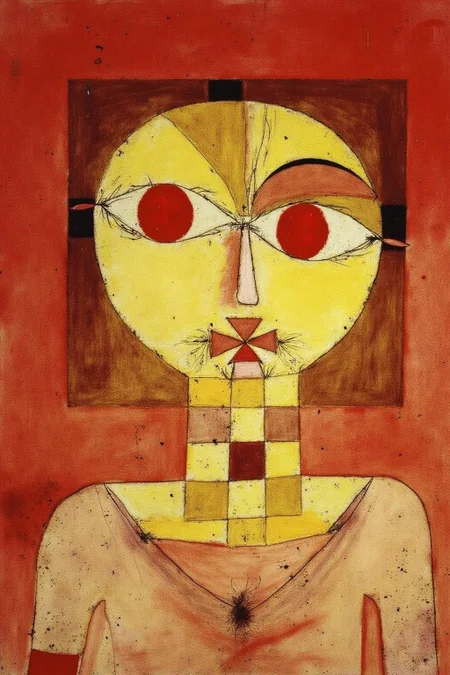
Art does not reproduce what we see. It makes us see. Art does not reproduce the visible; it makes visible – Paul Klee (18 December 1879 – 29 June 1940)
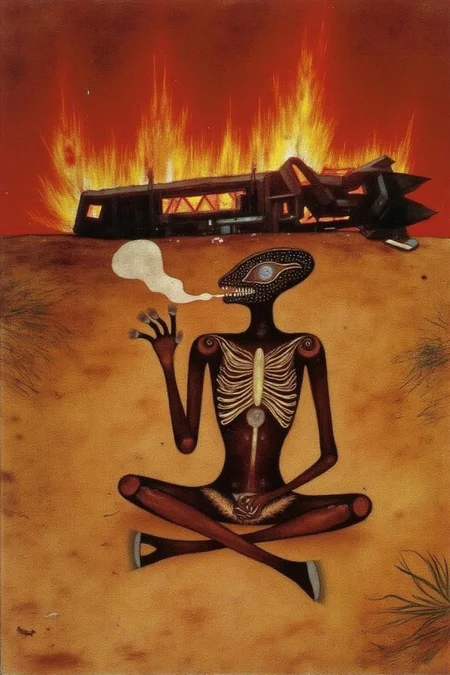
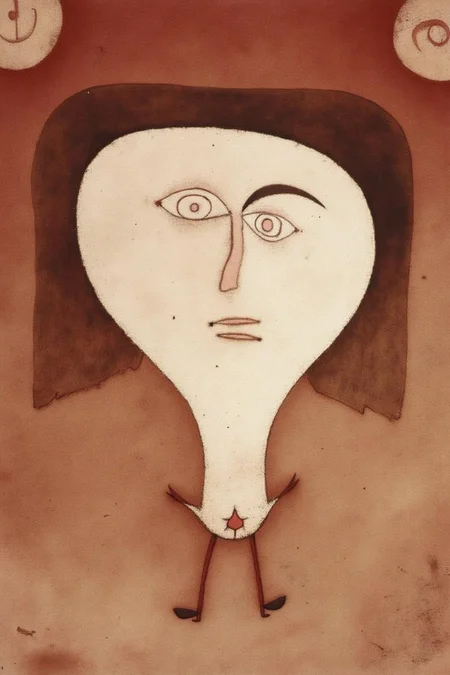
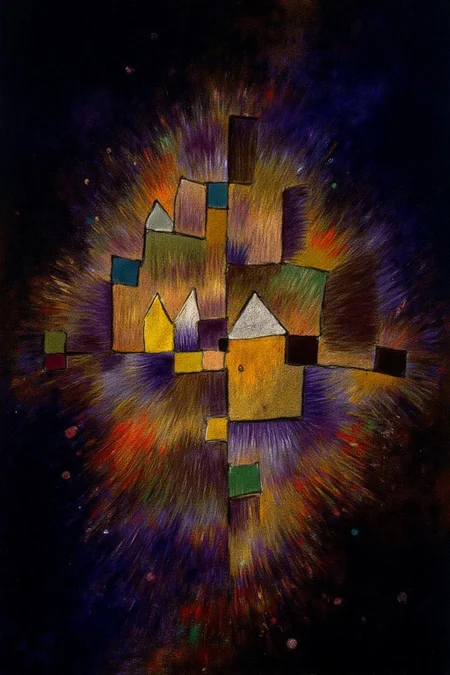
Trained on 42 images by the Swiss-born German painter Paul Klee. To see his works, please go to
I have to confess that I was aware of this innovative artist until last week. But some of his works are truly unique and spectacular. From Wikipedia:
His highly individual style was influenced by movements in art that included expressionism, cubism, and surrealism. Klee was a natural draftsman who experimented with and eventually deeply explored color theory, writing about it extensively; his lectures Writings on Form and Design Theory (Schriften zur Form und Gestaltungslehre), published in English as the Paul Klee Notebooks, are held to be as important for modern art as Leonardo da Vinci's A Treatise on Painting was for the Renaissance.[1][2][3]
Due to the highly abstract and diverse nature of his work, this LoRA is wild and unpredictable, but always interesting. I hope you'll be pleasantly surprised by what it can generate 😎🎈
From ChatGPT:
 Klee in 1926
Paul Klee was a Swiss-German painter and one of the most influential figures in 20th-century modern art. Known for his playful yet deeply symbolic style, Klee’s work defied strict artistic categories, blending elements of Cubism, Expressionism, and Surrealism. He explored color theory extensively and developed a highly personal visual language marked by whimsical forms, intricate patterns, and symbolic motifs.
Early Life & Education
Born: December 18, 1879, in Münchenbuchsee, Switzerland.
Klee’s early interests included music, heavily influenced by his father, a professional violinist. This lifelong musical influence would later shape the rhythmic structure and harmony of colors in his paintings.
He studied at the Academy of Fine Arts in Munich, where he developed his foundational artistic skills.
Artistic Evolution & Style
Klee’s artistic journey evolved through distinct phases, with recurring themes of fantasy, symbolism, and abstraction.
1. Early Work (1900–1913): Precision and Satire
Early in his career, Klee created etchings, caricatures, and highly detailed ink drawings.
His early works often combined dark humor with social commentary.
2. Encounter with Color (1914): The Tunisia Trip
A turning point came in 1914 when Klee traveled to Tunisia. The vibrant colors and luminous light profoundly affected him.
He famously wrote: "Color has taken possession of me; no longer do I have to chase after it. I know that it has hold of me forever."
This experience led him to integrate brilliant color palettes into his work.
3. Bauhaus Period (1921–1931): Teaching and Experimentation
Klee joined the Bauhaus (a revolutionary German art school) where he taught for nearly a decade.
His teachings focused on color theory, geometry, and the relationship between line, form, and emotion.
His Bauhaus period works often feature abstract compositions, musical rhythms, and symbolic imagery.
4. Surrealist Influence & Later Works (1930s): Personal Symbolism
Klee’s later works are characterized by their dreamlike quality, using symbols, hieroglyphics, and childlike forms to convey deeper meanings.
During this time, his work grew increasingly introspective, reflecting themes of mortality, spirituality, and resilience as he faced political upheaval and declining health.
Notable Works
Senecio (1922) A striking portrait composed of geometric shapes and bold colors, resembling a mask or theatrical face.

Twittering Machine (1922) A surreal depiction of mechanical birds perched on a crankshaft, blending whimsy with a sense of unease.
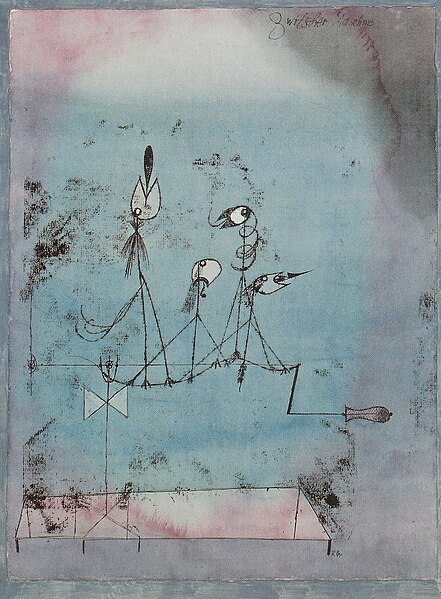
Castle and Sun (1928) A vibrant yet abstract cityscape created from geometric forms, demonstrating Klee’s mastery of color and composition.

Ad Parnassum (1932) An intricate mosaic of tiny dots and blocks of color, symbolizing a harmonious meeting of music and visual art.


Key Themes in Klee’s Art
Music and Rhythm: As a trained violinist, Klee’s compositions often echo musical structure, with repeating patterns and harmonious color schemes.
Fantasy and Playfulness: Many of his works feature whimsical creatures, imaginative worlds, and childlike forms.
Symbolism and Mysticism: Klee developed his own visual language of arrows, eyes, spirals, and hieroglyphs, representing spiritual ideas and personal introspection.
Emotional Depth: While some works are lighthearted, others reflect darker themes, particularly in his later years as he battled illness and faced Nazi persecution.
Challenges and Later Life
In 1933, after the Nazis labeled his art as "degenerate", Klee fled Germany and returned to Switzerland.
In his final years, Klee suffered from scleroderma, a debilitating illness that influenced his work’s introspective tone. Despite his declining health, Klee remained productive, creating over 1,200 works in his final year.
He passed away in 1940 at the age of 60.
Description
This is epoch 6, which is more weakly trained so the result is less predictable and so maybe more interesting. Other epochs can be found at tensor. art/models/838700189968560321/Paul-Klee-V1-1024CapD8A4Cos5-2025-03-09-03:47:25-Ep-8
FLUX.1 - dev-fp8
Trigger: paulklee1 painting
Repeat: 20 Epoch: 4 (Trained on 42 1024x1024 images for 3420 total steps)
Then repeated for another 4 epochs for a total of 6720 steps.
Unet LR: 0.0005 Scheduler: cosine Optimizer: AdamW
Network Dim: 8: Alpha: 4
Epoch Loss
1 0.347
2 0.340
3 0.341
4 0.334
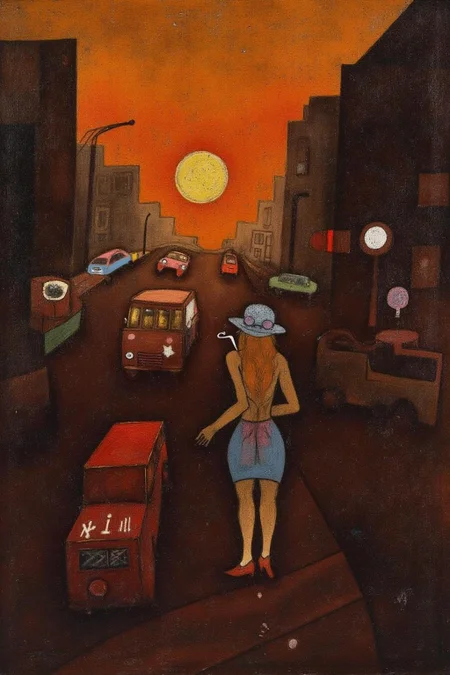
Prompt: paulklee1 painting of a woman smoking at a busy street corner at sunset.
5 0.336
6 0.331
7 0.333
8 0.323<-lowest
FAQ
Comments (4)
This is a great tribute to a really visionary 20th century artist. From Walter Benjamin:
"A Klee painting named ‘Angelus Novus’ shows an angel looking as though he is about to move away from something he is fixedly contemplating. His eyes are staring, his mouth is open, his wings are spread. This is how one pictures the angel of history. His face is turned toward the past. Where we perceive a chain of events, he sees one single catastrophe which keeps piling wreckage and hurls it in front of his feet. The angel would like to stay, awaken the dead, and make whole what has been smashed. But a storm is blowing in from Paradise; it has got caught in his wings with such a violence that the angel can no longer close them. The storm irresistibly propels him into the future to which his back is turned, while the pile of debris before him grows skyward. This storm is what we call progress."
Thank you for your kind words.
Unfortunately, visionaries tend not to get the kind of accolade and recognition that they deserve. To me, Klee is a bit like Schoenberg, whose arts are too abstract and deviate too much from the "norm" that most people would not be able to appreciate them (ironically, from what I read, the musically gifted Klee only enjoyed playing Bach and Mozart). It takes real effort to listen and to look at these works. I have to admit that I have a hard time enjoying atonal music, even though I do enjoy abstract visual art such as Klee's paintings.
But true artists don't care about such mundane matters. They will strive to create according to inner vision no matter what. Their works will stand the test of time (I hope 😅).
I am no artist, just a humble STEM guy, but I image that given the choice between producing works tailored to the masses and creating works that reflect their inner thoughts, which can only be appreciated by a much smaller, dedicated audience, most "real" artists will choose the latter (but then this is just a "No true Scotsman" statement 😎).
@NowhereManGo Very true. What you say reminds me a bit of Thomas Kuhn's theory of scientific revolutions. Most of the time we work within a paradigm. Sometimes a great scientist (or in this case, a visual artist or a musician) engages in revolutionary science (or avant garde art/music) that causes us to move past the older, now outdated paradigm, and everyone starts working in a new one.
In any event, some of Klee's works speak to me very personally. I love seeing his style represented here and I hope it inspires others.
@EdmundShadow That is a good analogy, and Kuhn's theory applies more to arts than to science, because in the end, scientific theory has to be validated by experimental facts, but paradigms in art is more of a societal convention. What moves innovative artists like Klee forward is their desire to create something new and break with the conventions, but whether the public will accept their works is beyond the artist's power.
I also agree that A.I. has the power to allow unconventional ways to explore art, by making the process more interactive and fun. We can ask what if questions like, what would a painting of a tiger look like if Klee created one? Museum aught to look into such digital installations. At the very least, children can have more fun 😁.
Details
Available On (1 platform)
Same model published on other platforms. May have additional downloads or version variants.