
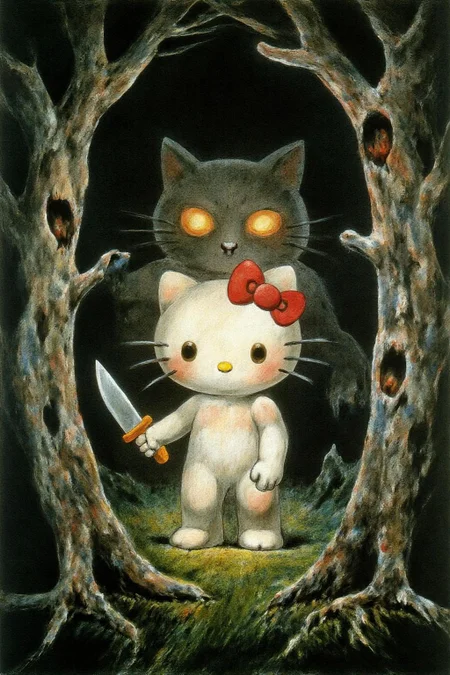
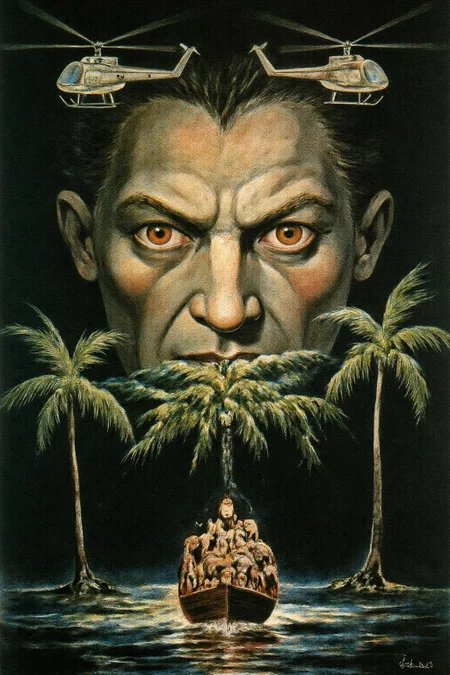
Trained on nineteen paintings by the English poet, painter, and printmaker William Blake (28 November 1757 – 12 August 1827). To see his works, please go to:
https://www.tuttartpitturasculturapoesiamusica.com/2012/11/william-blake-il-pittore.html
https://www.theguardian.com/culture/2014/nov/21/the-10-best-works-by-william-blake
From ChatGPT:
William Blake (1757–1827) – Poet, Painter, and Visionary
Overview
William Blake was a British poet, painter, and printmaker, celebrated for his mystical visions, unique artistic style, and radical ideas. He is considered one of the most significant figures of the Romantic movement, blending art and poetry in works that explore spirituality, politics, and the human condition. Though largely unrecognized during his lifetime, Blake is now hailed as a genius and pioneer of visionary art and literature.
1. Early Life
Born in London, England, in 1757 to a working-class family.
Displayed artistic talent from a young age, enrolling in drawing classes and apprenticing as an engraver.
His early experiences with religious visions shaped his worldview and later works.
2. Art Style & Techniques
Developed a highly personal and symbolic visual style, combining mythical and biblical imagery.
Known for watercolor paintings, etchings, and relief engravings.
Invented the "illuminated printing" technique, combining text and illustrations on the same plate, giving his books a handcrafted, otherworldly feel.
His figures often have an elongated, flowing quality, with vivid colors and dramatic compositions.
3. Themes & Symbolism
Blake’s art and poetry were filled with personal mythology and allegory, often addressing:
Spirituality and visions – Representations of angels, demons, and cosmic struggles.
Innocence and experience – A recurring theme in his poetry and art, reflecting dual aspects of human life.
Political and social commentary – He was critical of the industrial revolution, oppression, and institutionalized religion.
Myth and prophecy – Blake created his own mythology, with characters like Urizen (representing law and reason) and Albion (symbolizing England and humanity).
4. Notable Works
📖 Poetry and Art:
"Songs of Innocence and Experience" (1789/1794) – A collection of illustrated poems contrasting childhood innocence with the harshness of adult experience.
"The Marriage of Heaven and Hell" (1790–1793) – A visionary prose work blending satire, mysticism, and philosophy.
"Jerusalem" (1804–1820) – An epic poem filled with complex mythology and prophetic vision.
🎨 Artworks:
The Ancient of Days (1794) – A depiction of God as an architect, measuring the universe with a compass, a symbol of creation and control.
Newton (1795) – An image of Isaac Newton as a figure of pure reason, bent over his calculations, symbolizing Blake’s skepticism of science’s limitations.
Nebuchadnezzar (1795) – A haunting image of the Babylonian king reduced to a beast-like state, representing madness and human fall.
5. Legacy & Influence
Blake is now regarded as a visionary Romantic poet and artist, influencing both literature and visual art.
Inspired generations of artists, poets, and musicians, from the Pre-Raphaelites to modern figures like Allen Ginsberg and Patti Smith.
His emphasis on personal vision, imagination, and emotional truth laid the foundation for Symbolism, Surrealism, and modern fantasy art.
Final Thoughts
William Blake was an eccentric genius whose works transcend their time. His blend of poetry, mysticism, and art continues to captivate and challenge audiences, making him one of the most unique figures in Western culture. "To see a World in a Grain of Sand / And a Heaven in a Wild Flower"—Blake’s words and images still speak to the boundless power of imagination.
Description
This is epoch 13. The rest can be found at tensor.art/models/826953351334783983/William-Blake-V1-CapD6A3Cos5-2025-02-06-01:01:28-Ep-13
FLUX.1 - dev-fp8
Trigger: wblake1 painting
Repeat: 20 Epoch: 13 (Trained on 19 512x512 images for 4940 total steps)
Unet LR: 0.0005 Scheduler: cosine Optimizer: AdamW
Network Dim: 6 Alpha 3
Epoch Loss
1 0.383
...
4 0.371
5 0.352
6 0.337
7 0.334
8 0.320
9 0.307
10 0.279
11 0.270
12 0.268
13 0.260 <- lowest
FAQ
Details
Files
Available On (1 platform)
Same model published on other platforms. May have additional downloads or version variants.