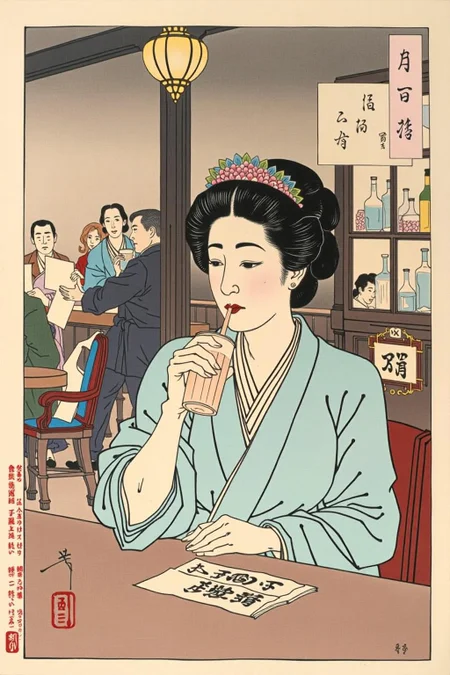
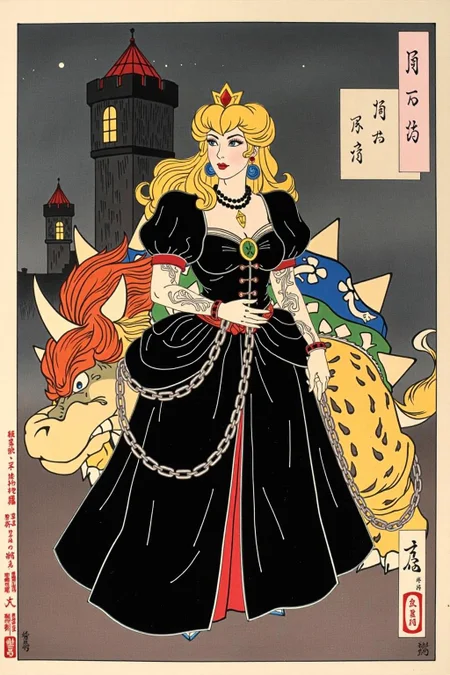
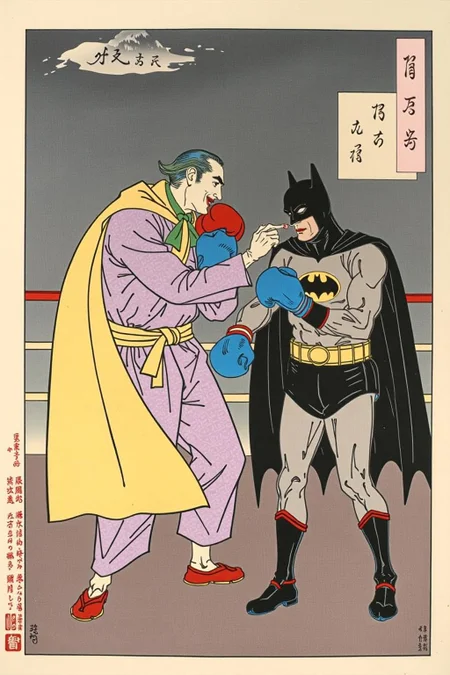

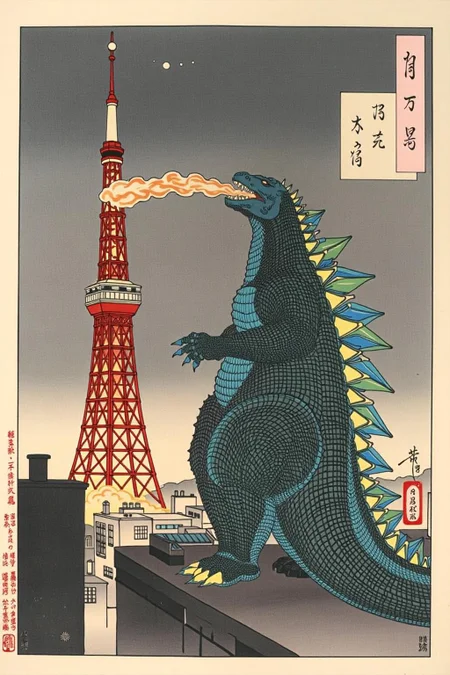
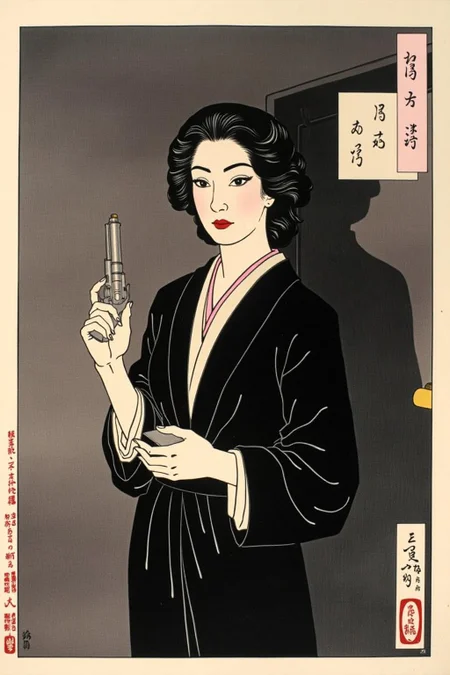
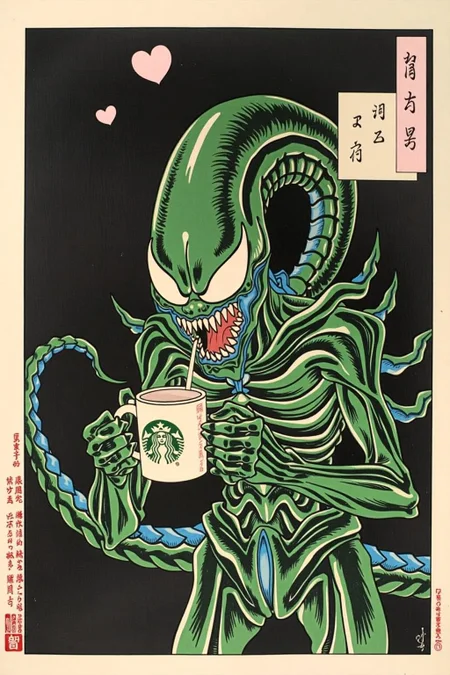
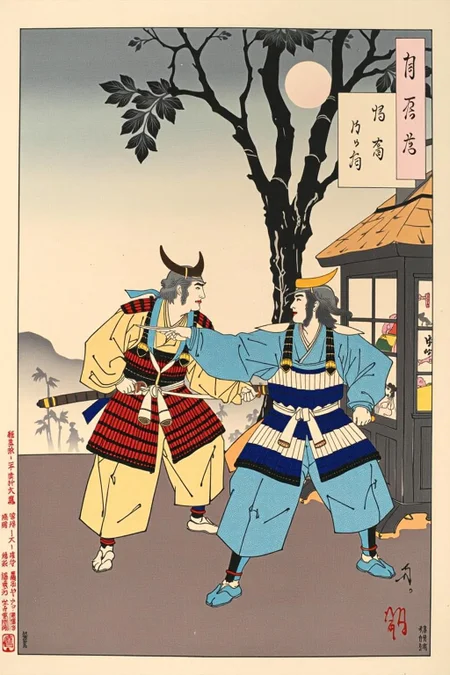
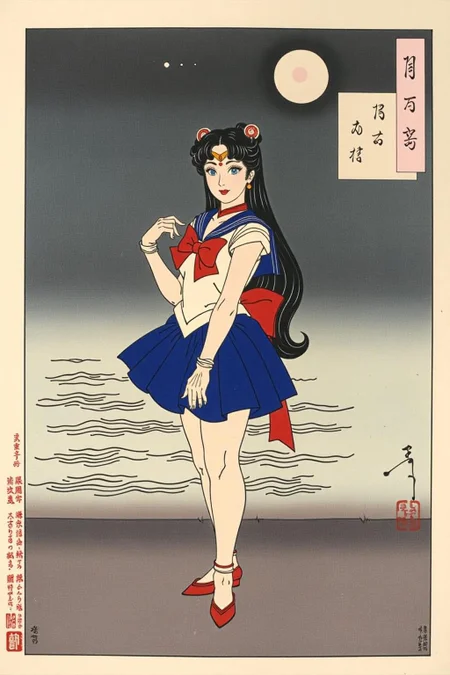
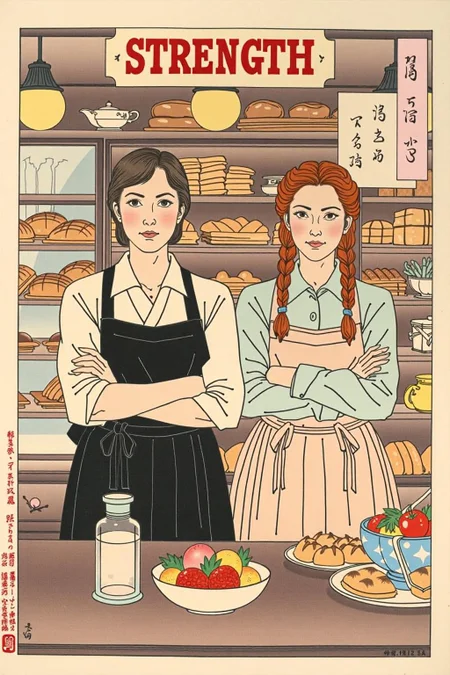
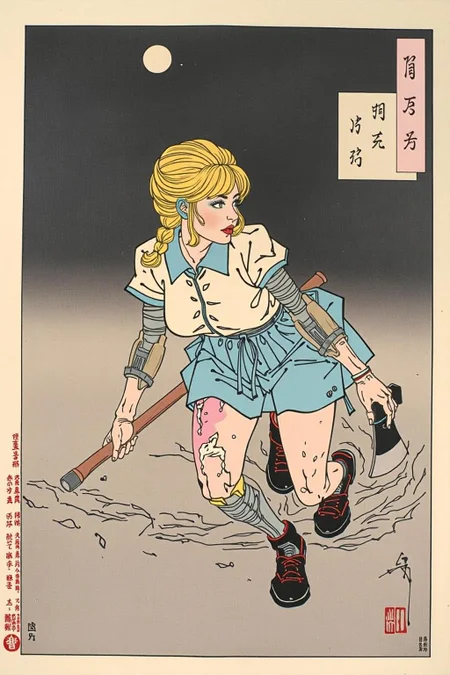
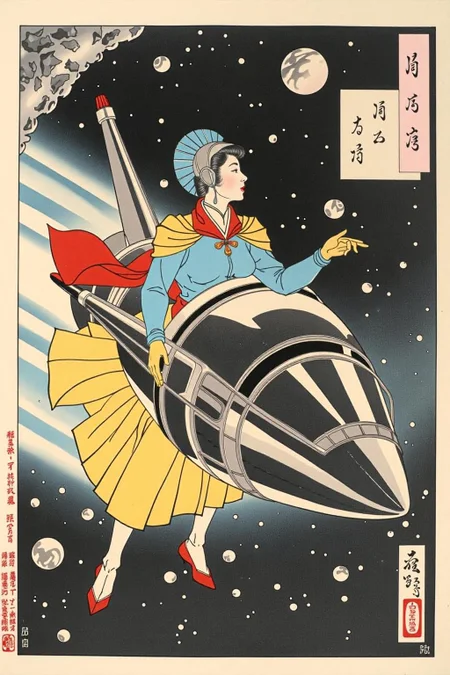
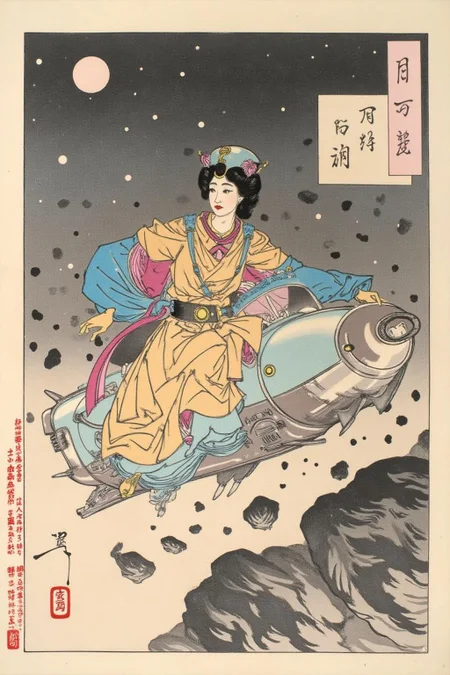

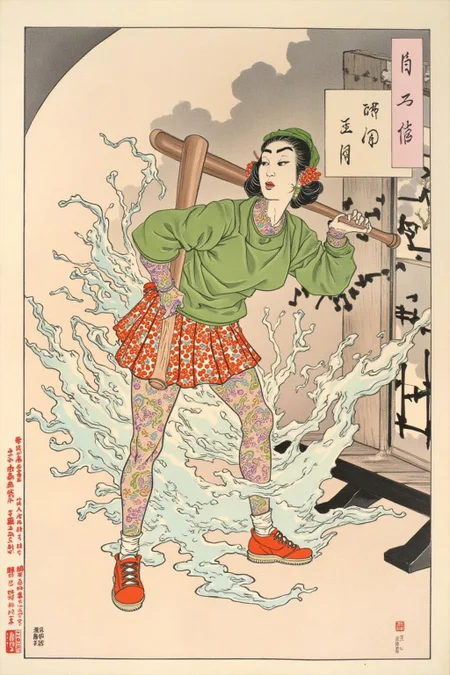


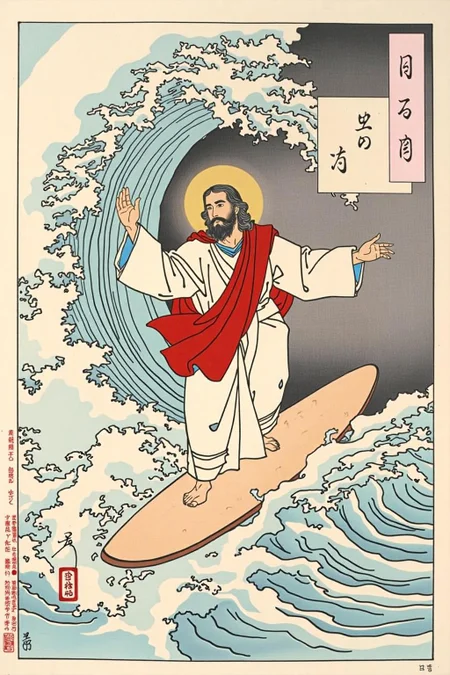
Inspired by master printmaker Tsukioka Yoshitoshi (月岡 芳年), whose style is too intricate for me to capture after multiple attempts. But this is still a fun LoRA. You can also check out this version by Elfheeim, and this one by an303042
Please post your first image directly here (click on "Add Post" above the gallery), and I will give you 10 buzz for the post (If I forgot, just complain loudly 😎)
For a taste of the real Tsukioka Yoshitoshi, please go to https://www.roningallery.com/artists/Yoshitoshi
From ChatGPT:
Tsukioka Yoshitoshi (1839–1892) was one of the last great masters of the ukiyo-e woodblock printing tradition in Japan. His work bridged the Edo and Meiji periods, showcasing both the classical aesthetic of ukiyo-e and a forward-looking approach that incorporated elements of modernization. He is best known for his striking, often dramatic prints that depict historical, mythological, and supernatural themes, as well as his keen psychological insight.
Life and Career
Early Life:
Yoshitoshi was born in Edo (modern-day Tokyo) as Owariya Yonejiro. From a young age, he showed artistic talent and began studying under the prominent ukiyo-e artist Utagawa Kuniyoshi when he was about 11 years old. Kuniyoshi’s influence is evident in Yoshitoshi's early works, particularly in his dynamic compositions and bold use of color.Struggles:
The Meiji Restoration (1868), which marked Japan’s transition from feudal to modern times, brought challenges for traditional ukiyo-e artists. Yoshitoshi struggled with poverty and mental health issues, but he persevered, eventually gaining recognition for revitalizing ukiyo-e during this period of decline.Artistic Revival:
By the 1870s, Yoshitoshi began to produce some of his most innovative works. His later career saw significant commercial and critical success, with his series "One Hundred Aspects of the Moon" (1885–1892) cementing his legacy.Death:
Yoshitoshi died in 1892, likely due to complications from poor health and mental illness. Despite his struggles, his contributions to ukiyo-e left a lasting impact.
Artistic Style
Themes:
Historical and Mythological: Many of Yoshitoshi’s works draw from Japanese history, folklore, and legends, often portraying famous warriors, poets, and historical events.
Supernatural: Ghosts, demons, and otherworldly beings frequently appear in his prints, reflecting his interest in the mysterious and macabre.
Psychological Depth: He brought an unprecedented emotional complexity to ukiyo-e, capturing fear, sorrow, bravery, and introspection.
Visual Characteristics:
Bold Color Use: Yoshitoshi used vivid reds, blues, and yellows, creating visually arresting prints.
Dynamic Compositions: His scenes often feature dramatic angles, movement, and tension, reflecting the influence of his teacher Kuniyoshi.
Attention to Detail: Yoshitoshi’s prints often include meticulous details in clothing, armor, and landscapes.
Innovative Techniques:
Yoshitoshi adapted traditional ukiyo-e techniques to incorporate new influences, such as Western-style perspective and shading, which were becoming popular in Japan during the Meiji era.
Notable Works
One Hundred Aspects of the Moon (1885–1892):
A series of 100 prints inspired by moon-related legends, poetry, and history. It is considered Yoshitoshi’s magnum opus, showcasing his mastery of composition and storytelling.Thirty-Six Ghosts (1889–1892):
A series of supernatural and eerie prints that explore Japan’s rich ghost and monster lore.New Forms of Thirty-Six Ghosts (1889):
This series combined traditional ghost stories with Yoshitoshi’s innovative style.Bloody Prints:
Early in his career, Yoshitoshi created prints with intense and violent imagery, such as those in the series "Twenty-Eight Famous Murders with Verse" (1866–1867). These works are noted for their shocking realism and dramatic power.Biographies of Modern Men (1885):
A series focusing on contemporary figures of the Meiji era, reflecting Yoshitoshi’s ability to adapt to modern themes.
Legacy
Revival of Ukiyo-e: Yoshitoshi is credited with keeping the ukiyo-e tradition alive during a time of decline, inspiring future artists.
Influence on Modern Art: His innovative compositions and psychological depth have influenced both Japanese and Western artists, including modern manga and anime creators.
Preservation of Culture: Yoshitoshi’s works serve as a window into Japan’s history and mythology, preserving its rich cultural heritage.
Today, Yoshitoshi is celebrated as a pivotal figure in Japanese art history, and his prints are held in high regard by collectors and art historians worldwide.
Description
Trained mostly using images from "Mirror of Famous Generals of Great Japan (1876–1882)"/『大日本名将鑑』 and "New Forms of Thirty-six Ghosts"/『新形三十六怪撰』.
This is epoch 10, the other epochs can be found here: tensor. art/models/798020570433443627/Tsukioka-Yoshitoshi-V4NoCap5Co-2024-11-20-00:52:06-Ep-10
FLUX.1 - dev-fp8
No caption trainging
Trigger: tsukioka1 Japanese woodblock print ukiyo-e
Repeat: 20 Epoch: 10 (Trained on fifteen 512x512 images for 3000 total steps)
Unet LR: 0.0005 Scheduler: cosine Optimizer: AdamW
Network Dim: 8 Alpha: 4
Epcho Loss
1 0.379
2 0.375
3 0.373
4 0.370
5 0.369
6 0.359
7 0.352
8 0.350
9 0.346
10 0.339 <- lowest
FAQ
Comments (3)
This LoRA seems really good. I love the results I'm seeing. Well done!
I've made a LoRA based on his work before, but I'll admit - yours seems better. You are still welcome to take a look if curious - https://civitai.com/models/786783/yoshitoshi-moon
Thank you for your kind comment, much appreciated 🙏.
I think your version is different but every bit as good. I actually did not use any image from "One Hundred Aspects of the Moon". My dataset is mostly from "Mirror of Famous Generals of Great Japan" and "New Forms of Thirty-six Ghosts," which explains the difference between the two LoRAs. I really like the dynamic, dramatic kabuki like poses in those two series, but turned out that that quality is too hard to capture by a small LoRA. TBH, this is probably the most difficult style LoRA I've trained, and I am only partially successful. I'll probably try again when I have some new insight as to how to improve it.
I've included links to your version in my resource section and in the model description.
I also really enjoy your other very creative LoRAs, specially Gesture Draw and Elektrosschutz
@NowhereManGo 🙏
Details
Files
Available On (1 platform)
Same model published on other platforms. May have additional downloads or version variants.